
If you’ve been quoted for a car welding repair and seen “MIG” or “TIG” mentioned without much explanation, you’re not alone in wondering what the difference actually is — and more importantly, which one your car needs. It’s one of the most common questions we get asked at MJ Welding & Fabrication in Lye, Stourbridge, especially from customers dealing with an MOT corrosion failure or a damaged alloy wheel.
The short version: MIG and TIG are two different welding processes, each suited to different materials, repairs, and levels of precision. Using the wrong one won’t just affect the cost — it can affect how strong and long-lasting the repair actually is. In this guide, we’ll break down exactly what each process does, when your car needs one over the other, and how to make sure whoever’s doing the work is using the right method for your specific repair.
What Is MIG Welding?
MIG stands for Metal Inert Gas welding. It works by feeding a continuous wire electrode through a welding gun, which melts and fuses with the base metal, while a shielding gas protects the weld from contamination in the air. It’s a relatively fast process, which makes it efficient for larger repairs and general automotive bodywork.
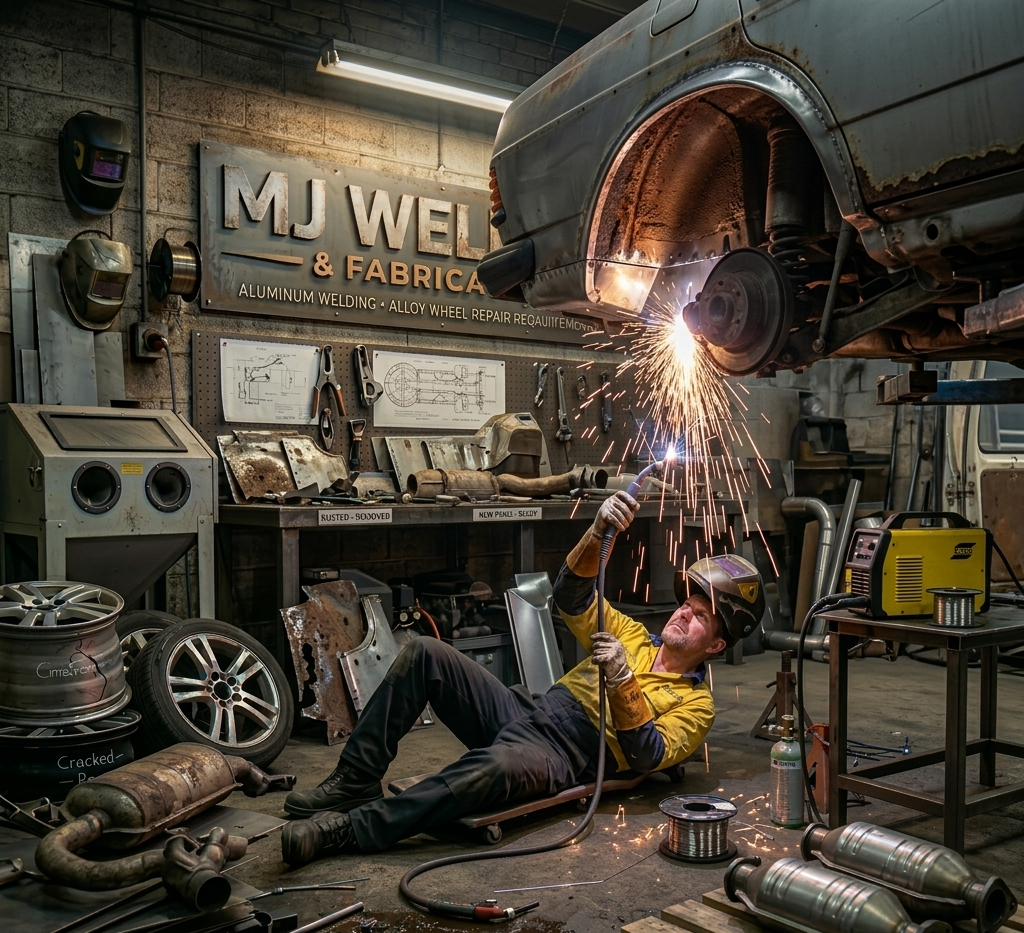
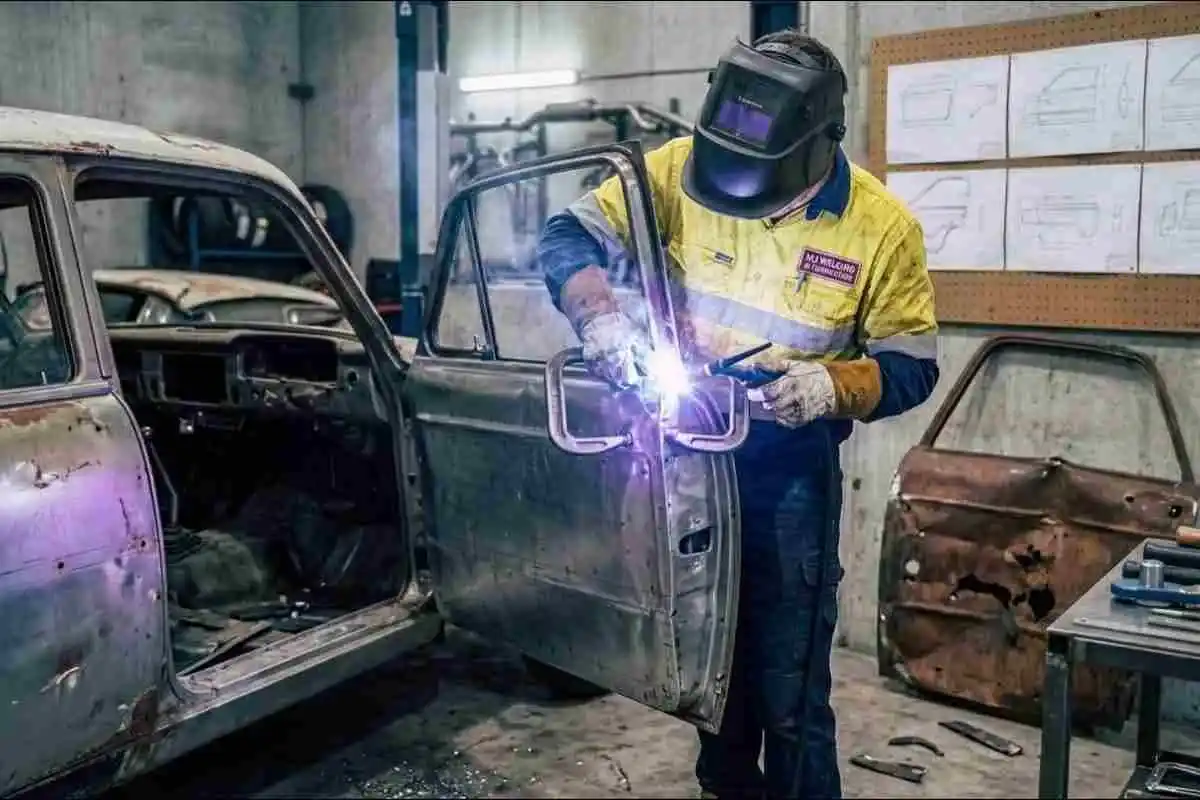
MIG welding is the workhorse of car bodywork repair. It’s what’s typically used for sills, wheel arches, floor pans, and general structural steel work — the kind of repairs that make up the bulk of MOT-related corrosion fixes. You can see more detail on how this applies to real repairs on our MIG welding for cars page and our breakdown of welding with a MIG welder.
Strengths of MIG welding:
- Faster than TIG, which keeps labour costs down
- Strong, reliable welds on standard steel bodywork
- Well suited to thicker structural sections like sills and chassis rails
- More forgiving process, meaning consistent results on larger repair areas
What Is TIG Welding?
TIG stands for Tungsten Inert Gas welding. Instead of a continuous wire feed, TIG uses a non-consumable tungsten electrode to create the arc, with a separate filler rod added by hand where needed. It’s a slower, more controlled process that gives the welder much finer control over heat and precision.
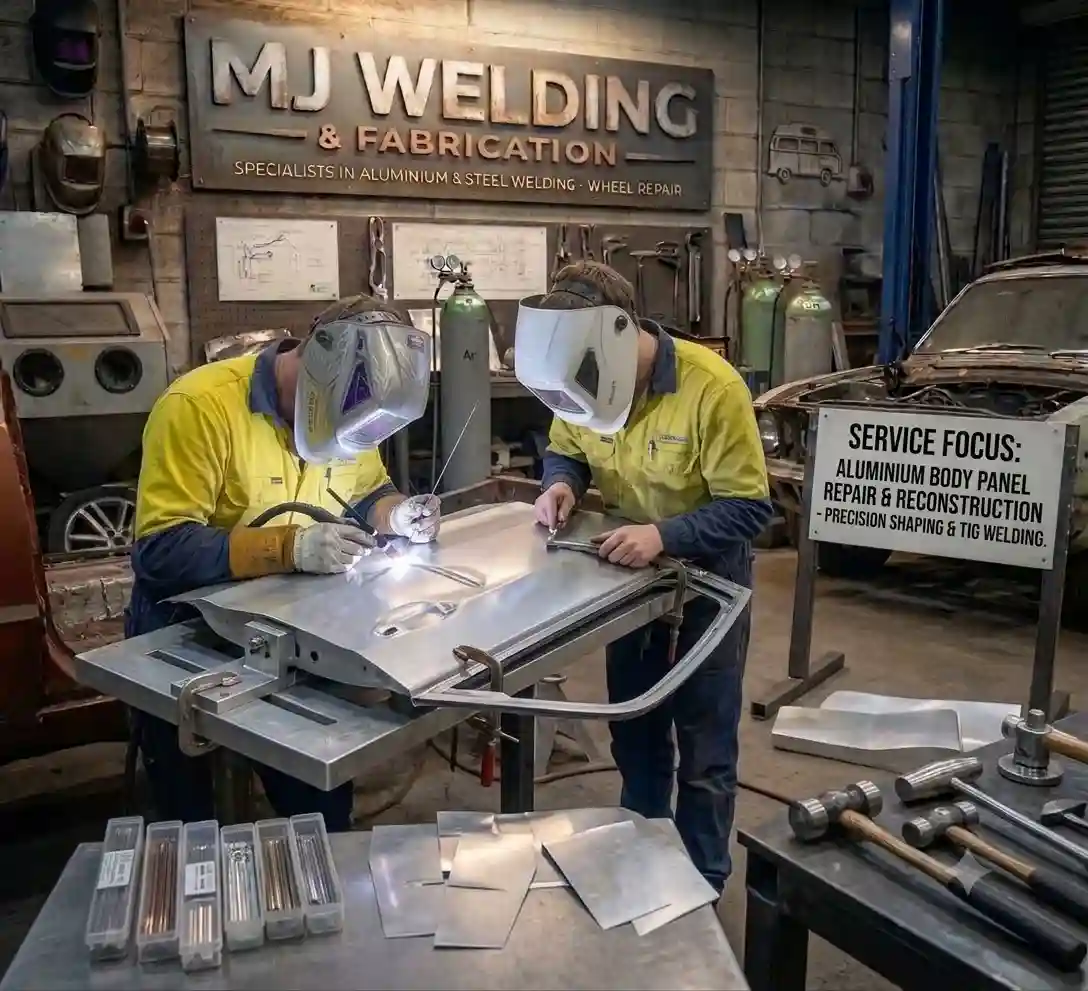
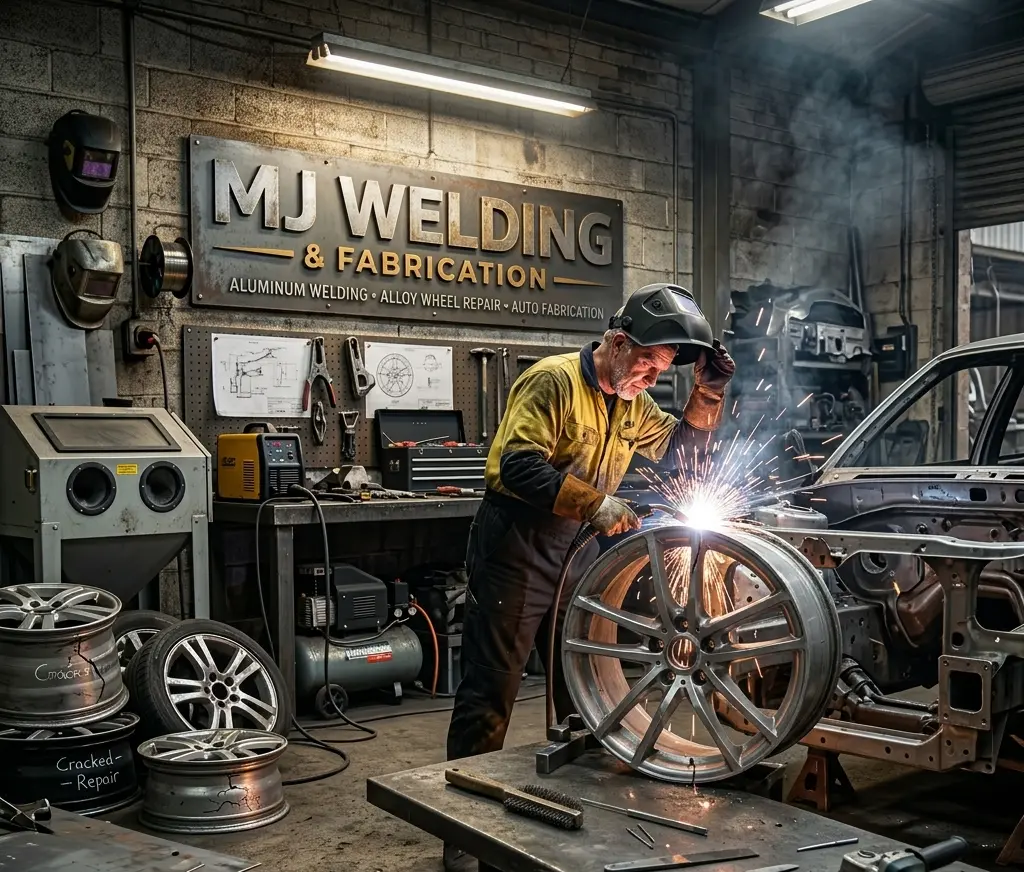
This makes TIG the go-to process for aluminium, thinner metals, and any repair where a clean, strong, low-distortion finish matters — think aluminium chassis components, camper van box sections, alloy wheel crack repair, and specialist fabrication work. You can read more on our TIG welding page.
Strengths of TIG welding:
- Precise control over heat, reducing the risk of warping thin panels
- The correct process for aluminium and most non-ferrous metals
- Produces a cleaner, smoother weld with less spatter
- Better suited to intricate or small-area repairs
Key Differences Between MIG and TIG Welding
| Factor | MIG Welding | TIG Welding |
|---|---|---|
| Speed | Faster | Slower |
| Skill level required | Moderate | High |
| Best for | Steel bodywork, structural sections | Aluminium, thin metal, precision work |
| Heat control | Less precise | Very precise |
| Finish quality | Good, functional | Clean, refined |
| Typical cost | Lower | Higher |
| Common car uses | Sills, arches, floor pans, chassis | Alloy wheels, aluminium panels, camper vans |
Neither process is “better” in absolute terms — they’re suited to different jobs. A skilled automotive welder will choose the process based on the material and the repair, not the other way around.
When MIG Welding Is the Right Choice for Your Car
If your repair involves standard steel bodywork, MIG welding is very likely the correct process. This covers the majority of MOT-related corrosion repairs, including:
- Sill repairs and replacements
- Wheel arch corrosion
- Floor pan repairs
- Chassis leg and structural steel repairs
- General body panel welding
Because it’s faster to complete without compromising strength on steel, MIG keeps labour time — and therefore cost — down for these repairs. If you want a full breakdown of what typical MIG repairs cost, our professional MIG welding services page covers this in more detail.
When TIG Welding Is the Right Choice for Your Car
TIG welding becomes necessary — not just preferable — for certain materials and repairs:
- Aluminium bodywork or chassis components. Aluminium reacts very differently to heat than steel, and MIG welding aluminium without the right setup often leads to weak, porous welds. Our aluminium welding service is built specifically around getting this right.
- Alloy wheel crack repair. Alloy wheels are cast aluminium, and repairing a crack or kerb damage properly requires TIG welding to avoid weakening the wheel structure. See our alloy wheel crack repair page for more.
- Camper van and specialist vehicle panels. Many camper van conversions use aluminium panelling and box-section chassis work, which is why camper van welding often relies heavily on TIG.
- Thin or delicate panels where MIG’s higher heat input risks warping or burning through the metal.
MIG vs TIG for MOT Corrosion Repairs
Most MOT corrosion failures involve standard steel — sills, chassis legs, floor pans, and seatbelt mounting points — which means MIG welding is usually the correct and most cost-effective process. If you’re not sure what’s causing your MOT failure, our guide on why cars fail their MOT on corrosion explains exactly what testers are checking for, and our pre-MOT structural rust checklist can help you spot problem areas before you book a test.
That said, if your vehicle has aluminium structural components — increasingly common on newer and premium vehicles — a proper structural or chassis repair may require TIG welding for those specific sections, even if the rest of the repair uses MIG.
Cost Comparison: MIG vs TIG Welding
As a general rule, TIG welding costs more per hour than MIG welding, because it’s a slower process that demands more skill and precision. However, the total cost of a repair depends far more on the size and complexity of the job than the process alone. A small TIG repair on an alloy wheel can easily cost less than a large MIG repair replacing an entire sill.
If a workshop gives you a welding quote without telling you which process they’re using, it’s worth asking — not just for cost reasons, but because using MIG on aluminium (or the wrong process generally) can genuinely compromise the strength of the repair.
Strength & Durability: Which Weld Lasts Longer?
When each process is used on the material it’s designed for, both MIG and TIG produce strong, durable welds capable of passing MOT structural checks and holding up under real driving conditions. The durability issue only arises when the wrong process is used for the material — for example, MIG welding thin aluminium can result in a weld that looks fine initially but fails prematurely due to poor fusion or heat distortion.
This is why the “which is stronger” question is really the wrong question. The right question is: which process is correct for this specific material and repair?
Can One Repair Need Both MIG and TIG?
Yes, and this is more common than people expect, particularly on modern vehicles that mix steel and aluminium components, or on larger structural repair jobs. A single repair might use MIG for the main steel sill section and TIG for an adjoining aluminium bracket or panel. A workshop with both capabilities — and the judgement to know when to switch between them — will give a stronger, more reliable overall repair than one that only offers a single process.
DIY MIG vs Professional TIG: Why It Matters for Safety
Home MIG welding kits are widely available and can seem like a tempting way to save money on a small patch repair. But structural car welding isn’t the place to cut corners. An MOT tester will fail a poor-quality weld just as quickly as untreated corrosion, and a repair that isn’t strong enough can genuinely affect the safety of the vehicle. TIG welding in particular requires real skill to get right — a rushed or poorly executed TIG weld on aluminium or an alloy wheel can be worse than no repair at all, since it may mask a structural weakness rather than fix it.
Common Car Repairs and Which Process They Typically Use
| Repair | Typical Process |
|---|---|
| Sill repair/replacement | MIG |
| Wheel arch repair | MIG |
| Floor pan repair | MIG |
| Chassis leg (steel) | MIG |
| Chassis leg (aluminium) | TIG |
| Alloy wheel crack repair | TIG |
| Aluminium body panels | TIG |
| Camper van box-section | TIG (often MIG for steel sections) |
| Exhaust bracket repair | MIG |
| Body panel replacement | MIG |
For more detail on how these repairs are diagnosed and carried out, take a look at our guide to the 5 most common car welding repairs and our page on car body panel replacement.
How to Know Which One Your Repair Needs
You don’t need to become a welding expert to get this right — you just need a workshop that will explain their reasoning rather than just quoting a number. Ask what process they’re planning to use and why, and whether your specific repair involves any aluminium components that would need TIG rather than MIG. Our guide on how to choose the right car welder covers the questions worth asking before you book any repair.
Why Choose MJ Welding & Fabrication for MIG & TIG Welding
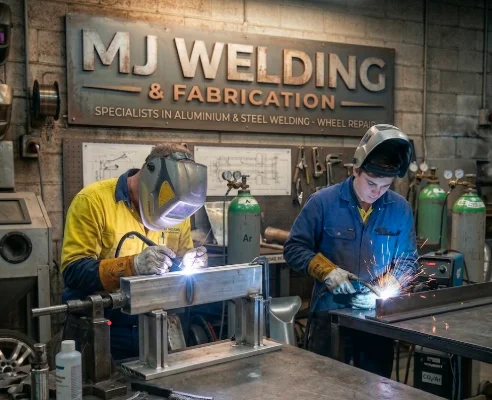
We carry out both MIG and TIG welding in-house at our Stourbridge workshop, which means we can match the process to the material rather than being limited to one method regardless of what the repair actually needs. Whether it’s a steel sill repair, an aluminium chassis section, or a cracked alloy wheel, we assess the job properly before recommending — and pricing — the right process. Take a look at our full range of services or read more about our workshop.
We work with customers across Stourbridge and the wider West Midlands, including Lye, Halesowen, Dudley, Kingswinford, Wolverhampton, Birmingham and Solihull.
Frequently Asked Questions
Is TIG welding better than MIG welding?
Neither is inherently “better” — they’re suited to different materials and repairs. TIG is required for aluminium and precision work; MIG is faster and more cost-effective for standard steel bodywork.
Can MIG welding be used on aluminium?
It’s possible with specific aluminium MIG setups, but TIG generally produces a stronger, more reliable weld on aluminium and is the preferred method for structural aluminium repairs.
Which process do MOT testers accept?
MOT testers assess the quality and strength of the finished weld, not the process used. What matters is that the correct process was used properly for the material, resulting in a sound structural repair.
Is TIG welding always more expensive?
Generally per hour, yes, because it’s slower and requires more skill. But overall repair cost depends more on the size and complexity of the job than the process alone.
Do I need to specify MIG or TIG when booking a repair?
Not necessarily — a competent workshop should assess your vehicle and tell you which process is appropriate. It’s still worth asking, so you understand what you’re paying for.
Can one repair use both MIG and TIG welding?
Yes, particularly on vehicles that mix steel and aluminium components, or on larger structural repairs involving multiple materials.
Book a MIG or TIG Welding Assessment in Stourbridge
Not sure which process your repair needs? That’s exactly what a proper inspection is for. Contact MJ Welding & Fabrication today for an honest assessment and a clear quote — using the right process for your vehicle, every time.
📞 Call: +44 7532 794934 📍 Bromley St, Lye, Stourbridge DY9 8HU

2 Responses