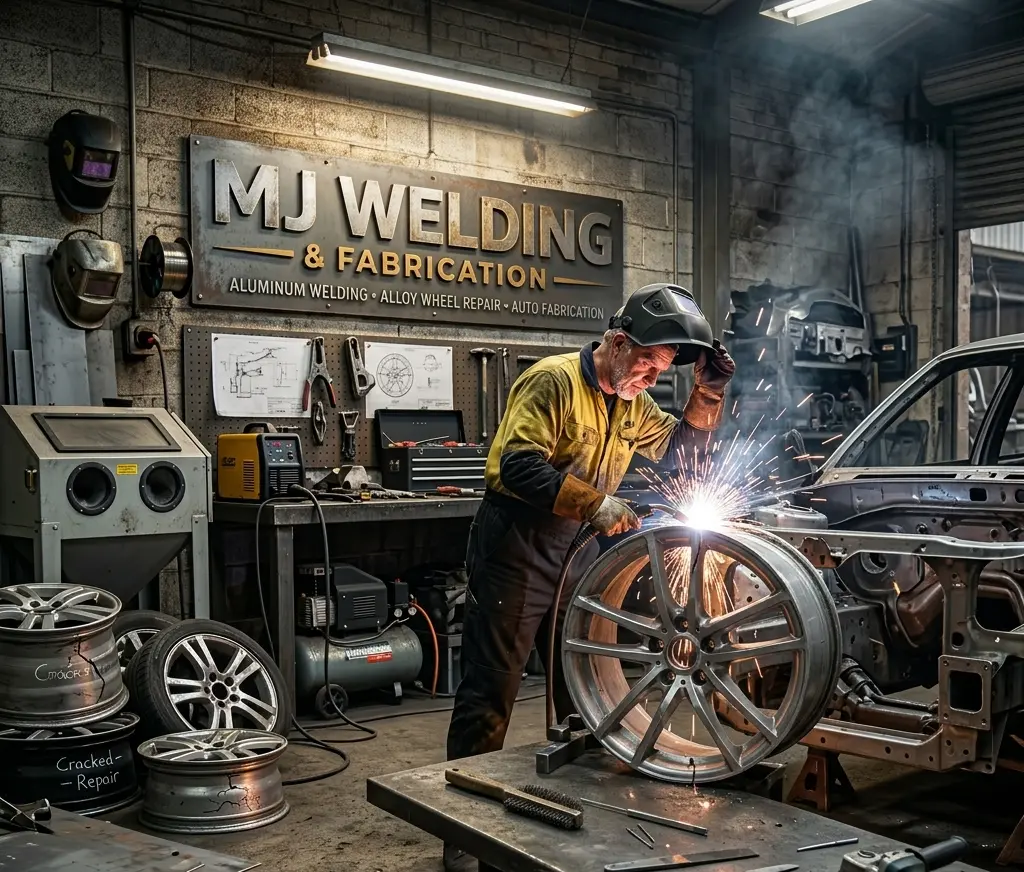
A cracked alloy wheel repair is possible in many cases, provided the crack is in a suitable location and the wheel can be restored safely by a skilled aluminium welder. In the UK, a straightforward repair typically costs around £60–£120 per wheel, while more complex damage can cost £120–£200 or more, depending on the wheel and the extent of the crack.
However, not every cracked alloy wheel should be repaired. The location of the damage, the severity of the crack and the wheel’s overall condition must be assessed before deciding whether welding is a safe option or replacement is necessary.
What Causes an Alloy Wheel to Crack?
Alloy wheels are designed to withstand everyday driving, but they can crack when exposed to sudden impacts or repeated stress. In our workshop, we often see damage associated with poor road surfaces, potholes and kerbs.
Common causes include:
- Potholes: Hitting a deep pothole at speed can create enough force to crack the wheel or bend its rim.
- Kerb impacts: Mounting a kerb or striking one at an awkward angle can damage the wheel’s edge.
- Road debris: Hard objects on the road can cause localised impact damage.
- Previous bends: A wheel that has already been bent or repaired may be more vulnerable to further damage.
- Metal fatigue: Repeated loading over time can contribute to cracks, particularly when a wheel has experienced previous impacts.
Even a small crack can become a serious problem if it allows air to escape or weakens an area that carries significant load.
What Are the Signs You Need Cracked Alloy Wheel Repair?
A cracked wheel does not always show obvious damage. Sometimes, the first sign is a tyre that repeatedly loses pressure.
Look out for these warning signs:
- Repeated air loss: You regularly need to inflate the same tyre without an obvious puncture.
- Steering wheel vibration: The car vibrates at certain speeds, although wheel imbalance, tyre damage and other faults can cause similar symptoms.
- Visible hairline cracks: Fine lines may appear on the inner barrel, around the rim or near the spokes.
- Bent or distorted rim: The wheel may have visible impact damage or no longer run true.
- Pressure warnings: Your tyre pressure monitoring system may alert you to a gradual loss of air.
If you suspect a crack, arrange an inspection rather than assuming the tyre simply needs resealing. Avoid driving on a wheel that is visibly cracked, losing pressure rapidly or causing significant vibration. If the damage appears serious, have the vehicle recovered.
Can a Cracked Alloy Wheel Repair Safely?
Yes, cracked alloy wheel repair can be a suitable solution when the damage is limited, accessible and structurally repairable. The important point is that a professional should assess the wheel before recommending welding.
When a wheel may be repairable
A repair may be considered when:
- There is a small, localised crack in a suitable area of the wheel barrel.
- The surrounding aluminium is in good condition.
- The wheel has no other serious structural damage.
- The crack can be properly prepared and welded without compromising the wheel’s integrity.
The final decision depends on the wheel’s construction, alloy type, damage location and applicable safety requirements.
When replacement is usually safer
Some damage makes repairing a cracked alloy wheel unsuitable. Replacement will often be the safer choice if the wheel has:
- Cracks through a spoke or another highly stressed structural area.
- Multiple cracks or extensive cracking.
- Severe bending, distortion or substantial impact damage.
- Significant corrosion or previous poor-quality repairs near the damaged area.
- Damage that cannot be repaired while maintaining the wheel’s structural integrity.
Cracks around the tyre bead seat, where the tyre seals against the wheel, need particular care because this area is essential for retaining air. A specialist must determine whether a repair is appropriate.
The rule is simple: saving money is never worth compromising wheel safety. If the wheel cannot be repaired to an acceptable standard, replacement is the right decision.
How Does Professional Cracked Alloy Wheel Repair Work?
Professional cracked alloy wheel repair involves more than simply joining two pieces of metal. The wheel must be assessed, the crack prepared correctly and the finished repair checked before the wheel is returned to service.
1. Inspection and damage assessment
The wheel is inspected to establish the crack’s location, length and severity. The technician also checks for bending, corrosion, previous repairs and other damage that could make welding unsuitable.
The wheel may need to be removed from the tyre to inspect the inner barrel and damaged area properly.
2. Crack preparation
If the wheel is suitable for repair, the damaged section is cleaned and the crack is prepared, often by creating a controlled V-shaped groove. This helps the welder access the crack and achieve appropriate weld penetration.
Correct preparation is essential. Welding over the surface without properly addressing the crack may leave part of the damage untreated.
3. TIG welding the aluminium
TIG welding is commonly used for suitable aluminium alloy wheel repairs because it allows the welder to control the heat and weld pool carefully.
At MJ Welding & Fabrication, aluminium welding experience is important when assessing the material and selecting an appropriate repair method. The wheel’s alloy composition and condition must be considered before welding begins.
You can learn more about the workshop’s aluminium and steel welding services.
4. Finishing and balance checks
After welding, the repaired area may need machining or careful finishing, depending on its position and the wheel’s design. The wheel should then be checked for suitability and balanced as required.
A balance check helps identify wheel imbalance, but it does not prove that a structural repair is safe on its own. The repair must also meet the relevant safety requirements.
For suitable wheels, professional TIG welding can form part of the repair process. The decision to proceed should always be based on the wheel’s condition, not simply whether the crack can be welded.
Cracked Alloy Wheel Repair Cost in the UK
The cost of cracked alloy wheel repair depends on the damage and the work needed to restore the wheel. A small crack in an accessible area will generally cost less to address than extensive damage requiring additional preparation and finishing.
The following figures are indicative UK estimates rather than a confirmed quotation from the workshop.
| Repair or replacement option | Typical UK price |
|---|---|
| Straightforward alloy wheel crack repair | £60–£120 |
| More complex crack repair | £120–£200+ |
| Cosmetic alloy wheel refurbishment | £60–£150 |
| Replacement standard alloy wheel | £100–£300+ |
| Premium or manufacturer-specific replacement wheel | £300–£1,000+ |
Prices are approximate guides and can vary by supplier, vehicle and wheel specification. Check the final repair quotation and whether tyre removal, balancing, finishing and VAT are included. [CHECK PRICE]
What affects the price?
Several factors influence the final cost:
- Wheel size: Larger wheels, including many 19-inch and 20-inch designs, may require additional work.
- Number of cracks: Multiple damaged areas can increase preparation and welding time.
- Crack location: Access and the wheel’s structure affect the complexity of the repair.
- Wheel condition: Bending, corrosion or previous repairs may complicate the assessment.
- Finish and painting: Diamond-cut finishes, specialist coatings and colour matching can add to the cost.
- Vehicle make and model: Some replacement wheels are considerably more expensive or harder to source than others.
Customers around Stourbridge often want to know whether repairing a cracked alloy wheel will be cheaper than buying another. It often can be, but the decision should take account of the wheel’s safety, not just its price.
How long does a repair take?
A straightforward repair may take around 1–3 hours of workshop work, while more complicated jobs can take longer. This is an indicative estimate, not a guaranteed turnaround time.
Additional time may be needed for tyre removal, inspection, machining, refinishing, balancing or sourcing a replacement. Ask for a time estimate after the wheel has been assessed.
Why Cheap Quick Fixes Are Not Worth the Risk
Cracked alloy wheels are structural components, so a cosmetic fix is not an acceptable substitute for a proper assessment and repair.
Avoid relying on:
- Metal filler or putty: These materials do not restore the wheel’s structural strength.
- Sealant alone: A product that temporarily stops air loss does not repair a structural crack.
- Unassessed surface welding: Welding without suitable preparation or checking may leave hidden damage.
- Repeated inflation: Adding air does not address the cause of a pressure leak.
A poorly repaired wheel can continue to lose air or fail under load. A professional should explain the risks and recommend replacement whenever the damage cannot be repaired safely.
Is a Cracked Alloy Wheel an MOT Failure?
A cracked wheel can result in an MOT failure if the damage falls within the relevant inspection criteria, particularly where it affects the wheel’s security or structural integrity. The exact outcome depends on the condition and applicable MOT requirements.
More importantly, you should not wait for your next MOT to address a suspected crack. A damaged wheel can lose pressure, affect handling or fail while driving.
If you notice a crack, significant vibration or rapid air loss, stop using the vehicle until the wheel has been assessed. If you are unsure whether it is safe to move the car, arrange recovery rather than taking the risk.
How to Avoid Cracking Your Alloy Wheels
You cannot prevent every pothole or road impact, but a few practical steps can reduce the risk of damage.
- Slow down for potholes: Reduce speed where safe and avoid driving through deep potholes when possible.
- Keep tyres correctly inflated: Check pressures regularly against your vehicle manufacturer’s recommendations.
- Take care near kerbs: Avoid striking kerbs when parking or manoeuvring.
- Inspect wheels after a hard impact: Look for visible damage and monitor tyre pressure following a significant pothole strike.
- Address vibration promptly: Do not assume it is simply a balancing issue without checking for wheel or tyre damage.
Low-profile tyres can offer less cushioning against impacts, so extra care is sensible if your car has larger alloy wheels.
Where to Get Advice on a Cracked Alloy Wheel in Stourbridge
If you have noticed a crack, repeated air loss or impact damage, MJ Welding & Fabrication can help assess whether a repair is appropriate.
The workshop has 15+ years of experience in aluminium and steel welding, including work involving alloy wheel cracks. Each wheel needs an individual assessment, and replacement should be recommended when the damage cannot be repaired safely.
Explore the alloy wheel crack repair service to find out more about the work offered.
Conclusion: Is Cracked Alloy Wheel Repair Worth It?
Cracked alloy wheel repair can be a cost-effective option when a crack is in a suitable location and the wheel remains structurally repairable. A straightforward repair may cost around £60–£120, compared with several hundred pounds or more for some replacement wheels.
However, cracks through spokes, multiple cracks, severe bending and other serious damage may make replacement the safer choice. Never rely on filler or a quick cosmetic fix to restore a damaged wheel.
If you suspect a cracked alloy wheel, arrange a professional inspection before continuing to drive on it. MJ Welding & Fabrication can help you understand the damage and the options available.
Frequently Asked Questions
1. Can a cracked alloy wheel be welded?
Yes, some cracked alloy wheels can be repaired using an appropriate welding process, such as TIG welding. Whether welding is suitable depends on the crack’s location, severity, wheel material and overall condition.
2. How much does cracked alloy wheel repair cost in the UK?
A straightforward repair typically costs around £60–£120, while more complex repairs can cost £120–£200 or more. The final price depends on the damage, wheel size and finishing requirements.
3. Is it safe to drive with a cracked alloy wheel?
It is not safe to assume that a cracked wheel can be driven on. A crack can cause air loss or structural failure. Avoid driving on a visibly damaged or leaking wheel and arrange a professional assessment.
4. Can a crack in an alloy wheel cause a tyre to lose air?
Yes. A crack in the wheel barrel or around the tyre’s sealing area can allow air to escape. However, a leaking valve, puncture or damaged tyre can cause similar symptoms, so inspection is needed to identify the cause.
5. Should I repair or replace a cracked alloy wheel?
Repair may be possible for limited damage in a suitable location. Replacement is often preferable when there are cracks through spokes, multiple cracks, severe bending or other structural concerns. Safety should determine the decision.
Got a cracked alloy wheel?
Call 07532 794934 or Book Online .