If your car needs a welding repair, one of the first things a good workshop will tell you is whether the job involves aluminum or steel — because aluminum vs steel welding are not the same process, and treating them as if they are is one of the most common (and costly) mistakes in automotive repair. The metal your car is built from determines the welding method, the equipment, the skill level required, and ultimately how strong and long-lasting the finished repair will be.
At MJ Welding & Fabrication in Lye, Stourbridge, we work with both metals every week, and car owners often ask us the same question: what’s actually the difference, and why does it matter for my repair? This guide walks through the key differences between aluminum and steel welding, when each one applies to your vehicle, what it costs, and how to make sure your repair is done correctly the first time.
What Is Steel Welding?
Steel is the traditional backbone of car manufacturing — it’s strong, relatively inexpensive, and forgiving to work with. Most structural components on a typical vehicle, including sills, chassis rails, floor pans, and wheel arches, are made from steel. Steel welding is most commonly carried out using MIG (Metal Inert Gas) welding, which feeds a continuous wire electrode through a welding gun to fuse the metal quickly and efficiently. You can read more about this process on our MIG welding services page.
Steel responds well to heat and is far less prone to distortion than aluminum, which is part of why it remains the material of choice for structural, load-bearing components across most vehicles on the road.
What Is Aluminum Welding?
Aluminum is increasingly used in modern vehicles — bonnets, body panels, structural reinforcements, and in some cases entire chassis structures, particularly on premium and performance vehicles like Range Rovers, Jaguars, and newer BMW and Audi models. Aluminum is roughly a third of the weight of steel and offers excellent corrosion resistance, which helps manufacturers meet fuel economy and emissions targets.
However, aluminum behaves very differently to steel under heat. It has a much lower melting point, conducts heat far more quickly, and forms an oxide layer on its surface that must be removed before welding can begin properly. For these reasons, aluminum welding is almost always carried out using TIG (Tungsten Inert Gas) welding — a slower, more controlled process that gives the welder precise control over heat input. You can see more on our TIG welding page and our dedicated aluminum and steel welding service.
Aluminum vs Steel Welding: Core Differences Explained
| Factor | Steel Welding | Aluminum Welding |
|---|---|---|
| Common process | MIG welding | TIG welding |
| Melting point | Higher, more forgiving | Lower, easy to overheat |
| Heat conductivity | Lower | Much higher |
| Distortion risk | Lower | Higher without precise control |
| Oxide layer | Not a major issue | Must be removed before welding |
| Typical car components | Sills, chassis, arches, floor pan | Body panels, bonnets, some chassis |
| Skill level required | Moderate | High |
| Typical cost | Lower | Higher |
This table sums up why aluminum vs steel welding isn’t just a preference — it’s a material-driven decision that a competent welder makes based on what your vehicle is actually built from.
Aluminum vs Steel Welding: Which Process Is Used for Each Repair?
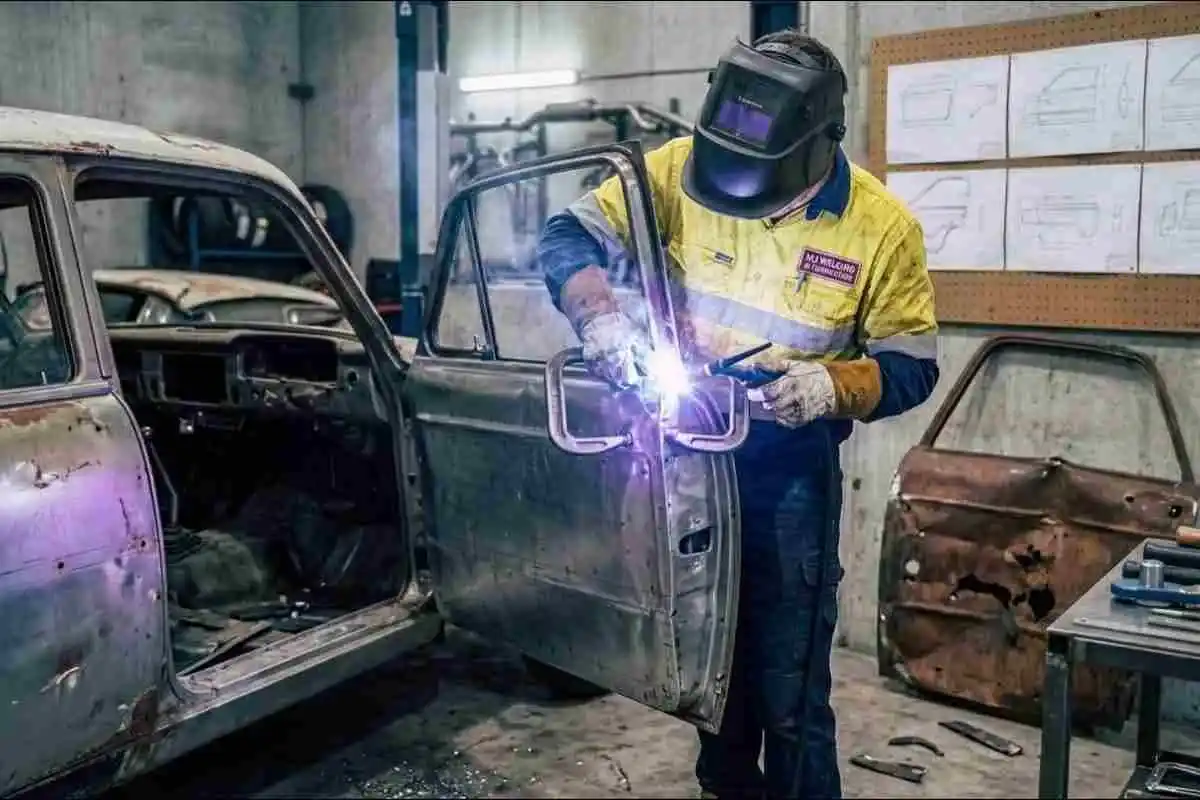
In practice, most of the structural MOT-related repairs we carry out — sill replacement, arch repair, floor pan work, and standard chassis repair — use MIG welding on steel, because that’s what the majority of a car’s structural framework is made from. You can see this covered in detail on our chassis repair service page and our sills and arch welding service.
Where a vehicle has aluminum components — a bonnet, a body panel, or on some models an aluminum chassis section — TIG welding is the correct and necessary process. Our body panel repair service covers both steel and aluminum panel work, using the correct process for whichever material your vehicle is built from.
Aluminum vs Steel Welding Costs: What Car Owners Should Expect
Because TIG welding is slower and requires a higher level of skill, aluminum welding generally costs more per hour than steel MIG welding. That said, total repair cost depends far more on the size and complexity of the job than the process alone — a small aluminum panel repair can easily cost less than a large steel sill replacement.
For a full breakdown of typical UK pricing across different repair types, take a look at our 2026 car welding price guide, which covers both steel and aluminum repair costs in detail.
Aluminum vs Steel: Which Is Stronger After Welding?
This is one of the most common questions we get, and the honest answer is that it’s the wrong way to frame it. When each metal is welded using the correct process, by someone who genuinely understands the material, both aluminum and steel repairs can be just as strong and durable as the original component. Problems only arise when the wrong process is used — for example, attempting to MIG weld aluminum, which can produce a weld that looks acceptable on the surface but is weak, porous, and prone to premature failure underneath. For more on how the two welding methods compare directly, see our guide on TIG vs MIG welding for cars.
Common Car Parts Made from Aluminum vs Steel
- Typically steel: sills, chassis rails, floor pans, wheel arches, seatbelt mounting points, subframes, and most exhaust brackets
- Typically aluminum: bonnets, some doors and wings, structural reinforcements on premium models, engine components, and increasingly, entire chassis structures on vehicles like the Land Rover Defender
Many modern vehicles now use a mix of both metals in the same structure, which means a single repair job can genuinely require both MIG and TIG welding on different sections of the same vehicle.
Aluminum vs Steel Welding for MOT Corrosion Repairs
Most MOT structural failures relate to steel corrosion in the sills, chassis, and floor pan, which means MIG welding is usually the correct and most cost-effective process. Our guide on why cars fail their MOT on corrosion explains exactly what testers check, and the official government MOT inspection guidance sets out the structural requirements every vehicle must meet. If you’d like to check your own vehicle beforehand, our pre-MOT structural rust checklist is a useful starting point, and our page on MOT failure welding repairs covers the process in more detail.
Signs Your Car Needs Aluminum or Steel Welding Repair
- Visible rust or corrosion around sills, arches, or the underbody (almost always a steel repair)
- Cracked or split body panels or a damaged bonnet (could be steel or aluminum, depending on the model)
- Knocking, rattling, or vibration from underneath the vehicle
- A recent MOT failure citing structural corrosion or damage
- Visible cracks on cast aluminum components such as alloy wheels — see our alloy wheel crack repair service
If you’re not sure which material is affected, our guide on 10 hidden signs your car needs welding is worth a read before you book a repair.
Why You Should Never DIY Aluminum vs Steel Welding Repairs
Home MIG welding kits are widely available, and it can be tempting to attempt a small repair yourself, particularly on steel. But structural car welding is not the place to cut corners, and this goes double for aluminum. A failed aluminum weld isn’t always visually obvious — it can hold temporarily before failing later under load, which is a genuine safety risk. General welding safety, including fume extraction and correct protective equipment, is also covered in HSE guidance on welding, which underlines just how specialist this work needs to be. An MOT tester will fail a poor-quality weld just as readily as untreated corrosion, so getting it right the first time, with the correct process for the material, is always the more cost-effective route in the long run.
How MJ Welding & Fabrication Handles Aluminum vs Steel Welding
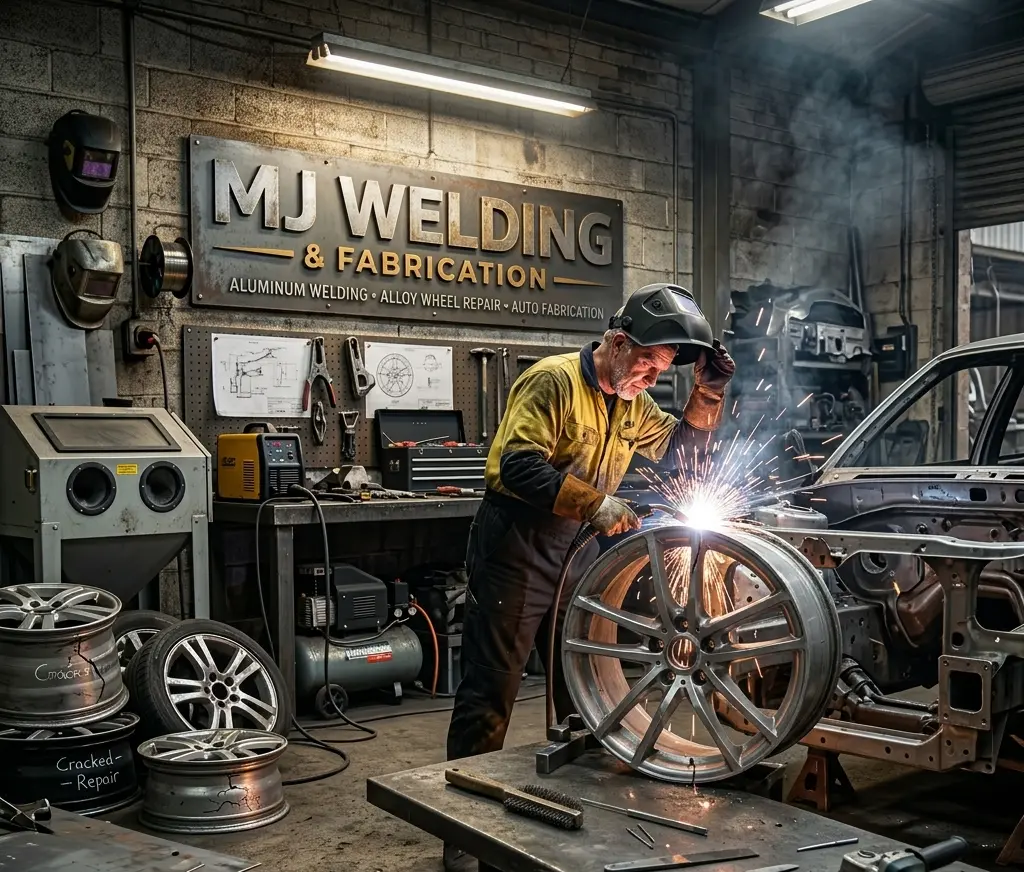
We carry out both TIG aluminum welding and MIG steel welding in-house at our Stourbridge workshop, which means we’re never limited to a single process regardless of what your vehicle is built from. Every repair starts with a proper physical inspection, so we can identify the material, assess the extent of the damage, and recommend — and price — the correct process before any work begins. You can see our full range of automotive welding services or read more about our workshop and experience.
Areas We Cover for Aluminum and Steel Welding
We carry out aluminum and steel welding repairs for customers across Stourbridge and the wider West Midlands, including Birmingham, Dudley, Halesowen, Wolverhampton, and Solihull, as well as the wider Stourbridge area and surrounding West Midlands locations.
Frequently Asked Questions
Is aluminum welding harder than steel welding?
Generally yes. Aluminum’s low melting point, high thermal conductivity, and oxide layer make it far more demanding to weld correctly than steel, which is why TIG welding and specialist experience are essential.
Can the same welder do both aluminum and steel welding?
Yes, but it requires training and equipment for both processes. A specialist automotive welder should be equipped and experienced in both MIG steel welding and TIG aluminum welding, since many modern vehicles use both materials.
Does aluminum rust like steel?
No. Aluminum doesn’t rust in the way steel does, but it can still corrode, crack, or suffer stress fractures, particularly around mounting points and areas exposed to repeated flexing or impact.
Which is cheaper to repair, aluminum or steel?
Steel repairs are generally cheaper because MIG welding is faster and requires less specialist skill than TIG welding on aluminum. However, the overall cost depends more on the size and extent of the damage than the material itself.
How do I know if my car’s chassis is aluminum or steel?
This depends on the make and model — some SUVs and premium vehicles use aluminum chassis structures, while most standard vehicles use steel. If you’re not sure, a professional inspection will confirm this before any work begins.
Can aluminum and steel be welded together directly?
Not using standard fusion welding — the two metals have very different properties and generally require alternative joining methods (such as mechanical fasteners or specialist bonding) rather than being welded directly to one another.
Get an Aluminum or Steel Welding Assessment in Stourbridge
Not sure whether your repair needs aluminum TIG welding or steel MIG welding? That’s exactly what a proper inspection is for. Contact MJ Welding & Fabrication today for an honest assessment and a clear quote — using the correct process for your vehicle’s material, every time.
📞 Call: +44 7532 794934 📍 Bromley St, Lye, Stourbridge DY9 8HU

5 Responses