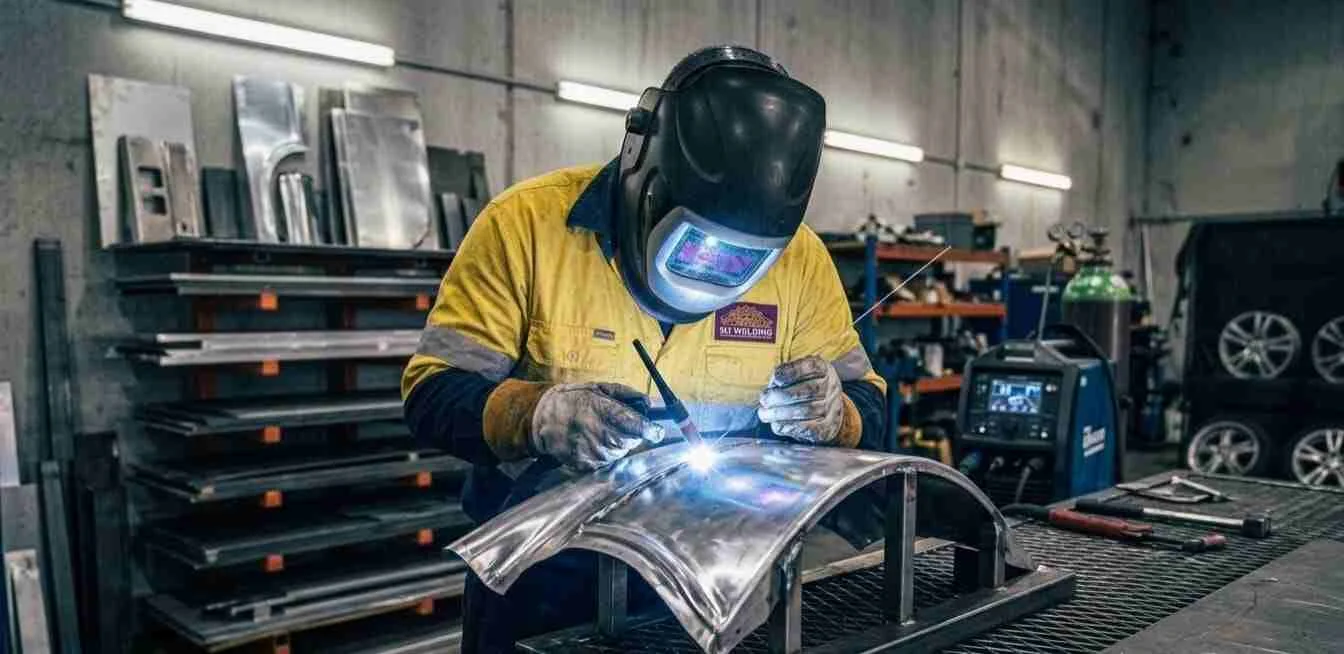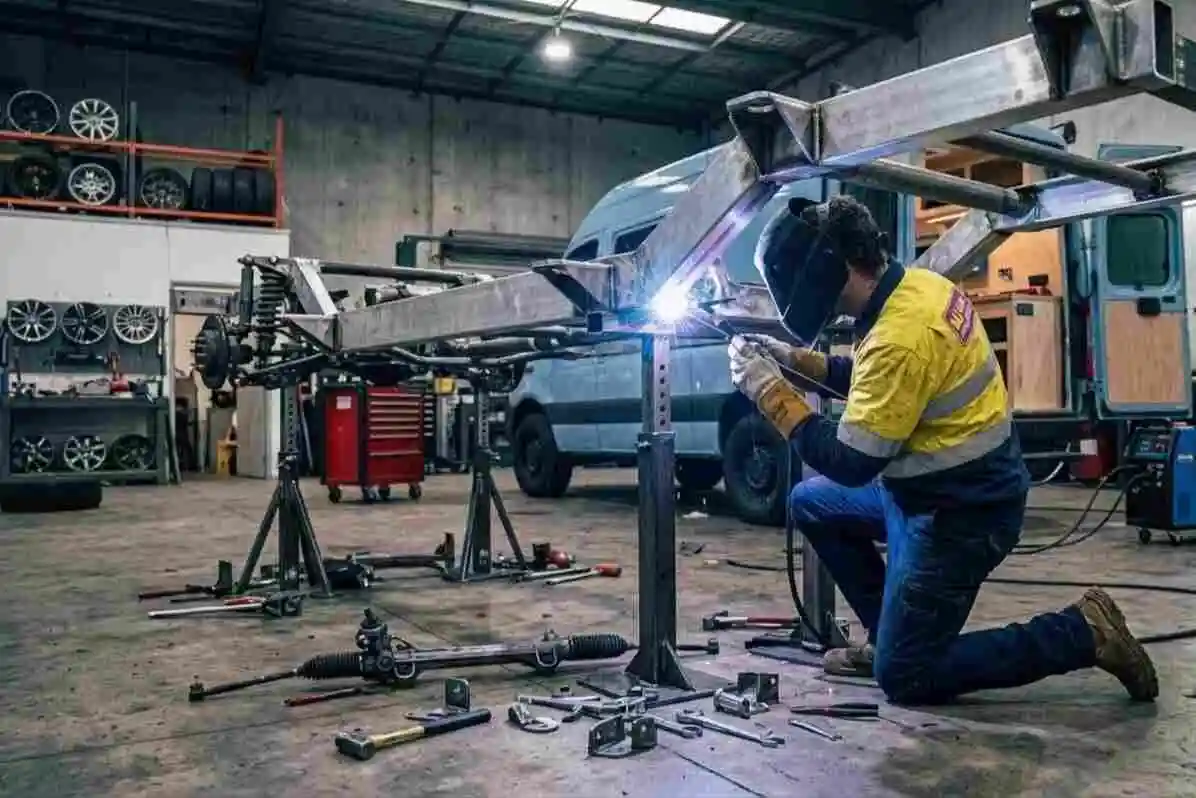
Classic Car Restoration is never just about making it look right again. Underneath the paint, chrome and trim sits decades-old steel that has usually been fighting a slow, silent battle against rust, fatigue and previous “quick fix” repairs. Get the welding wrong on a restoration project, and you don’t just risk a poor finish — you risk the structural safety, MOT compliance and long-term value of a vehicle that can’t simply be replaced with an off-the-shelf part.
At MJ Welding & Fabrication, we work with classic car owners across Stourbridge, Halesowen and the wider West Midlands who want restoration work done properly — not rushed, not covered up, and not treated like a modern insurance repair. This guide explains what actually goes wrong on classic cars, how proper restoration welding works, and what to look for before you hand your car over to anyone.
Why Classic Cars Rust Differently to Modern Cars
Older vehicles were built with thinner protective coatings, simpler drainage design and steel that wasn’t treated with the same corrosion-resistant processes used today. Combine that with 20, 30 or even 50+ years of exposure to moisture, road salt and poor storage conditions, and it’s no surprise that rust on a classic car is often more extensive than it first appears.
The problem is that classic car corrosion tends to hide. A small bubble in the paint on a sill or wheel arch can be the only visible sign of a much larger problem developing underneath layers of underseal, filler or old repair panels. This is one of the main reasons classic car restorations take longer than expected once the metal is actually opened up — what looked like a two-hour job on the surface can reveal a much bigger structural repair once you get past the first layer.
The Most Common Areas That Need Restoration Welding
Every classic is different, but across the vehicles we see in our Stourbridge and Halesowen workshops, the same structural zones come up time and time again:
Sills and inner sill sections — Sills sit low to the ground and are constantly exposed to spray, salt and standing moisture, which is why sill corrosion is one of the most common causes of MOT failure on both classic and modern vehicles alike.
Floor pans — Rust here often starts from water ingress through door seals, sunroof drains or old repairs, and can spread quietly for years before it’s noticed.
Wheel arches and arch lips — Constant exposure to grit, moisture and road spray makes these one of the earliest places corrosion appears.
Chassis rails and box sections — On many classics, the chassis is the backbone of the car’s structural integrity, and any chassis repair work needs to be done with precision to keep the vehicle safe and true to its original geometry.
A and B pillars — These carry significant structural load and are safety-critical in the event of an impact, so any corrosion here has to be addressed with full panel work rather than a quick patch.
Boot floors and spare wheel wells — Often overlooked because they’re hidden under carpet or trim, but just as prone to long-term moisture damage.
Problems We Commonly Find During Restoration Inspections
Filler hiding rust, not fixing it.
One of the most frequent issues we come across on classic restorations is bodywork filler applied directly over corroded metal from a previous repair. It looks fine for a while, but the rust underneath keeps spreading, and the filler eventually cracks or falls away.
Mismatched or incorrect-gauge repair panels.
Some earlier repairs use metal that’s too thin, not shaped correctly, or simply welded in without proper preparation — weakening the structure rather than restoring it.
Rust that’s spread further than expected.
Because corrosion travels along seams and box sections, what looks like a small patch of surface rust can actually extend much further into the structure once uncovered.
Poor previous welds.
We regularly see old repairs done with the wrong welding process for the metal thickness involved, leading to warping, pinholing, or welds that were never structurally sound in the first place.
Original panel gaps and factory lines lost.
On a proper restoration, panel fit and factory contour lines matter — a repair that ignores this can leave a car looking “restored” but never quite right.
How We Approach Classic Car Restoration Welding
Every classic that comes into our workshop is assessed individually before any welding begins. Restoration work isn’t something that can be quoted from a photo — rust often extends beyond what’s visible, and the right repair depends on the vehicle’s age, original construction and how much of the original metal is worth saving.
1. Full inspection before any cutting. We check sills, floors, arches, chassis rails and pillars thoroughly, including areas that are typically hidden behind trim, underseal or old repairs, so nothing is missed once welding starts.
2. Cutting back to clean, solid metal. We don’t weld over rust, and we don’t patch on top of corrosion that’s already spreading. Affected sections are cut back until only clean, structurally sound metal remains.
3. Precision MIG welding matched to the vehicle. Our MIG welding services are carried out to match the original metal thickness and structure of the car, so repairs are strong without distorting the surrounding panels.
4. Structural and sills & arch welding carried out to factory-accurate standards, keeping panel gaps, contour lines and structural strength consistent with the rest of the vehicle.
5. Full explanation before we start. Every classic car owner gets a clear breakdown of what’s been found, what needs doing, and why — so there are no surprises partway through the job.
We take the same approach with structural welding and body panel repair on classics as we do on daily-driven vehicles: proper preparation, proper technique, and a repair that’s built to last — not just to pass an eye test.
Patch Repair vs Full Panel Replacement on Classics
This is one of the most common questions classic car owners ask us, and it’s worth understanding before any work starts.
A patch repair can be appropriate when corrosion is limited to a small, well-defined area and the surrounding metal is still structurally sound. It’s typically faster and more cost-effective, but only when carried out correctly — cut back to clean metal, not simply welded over a weak area.
A full panel replacement becomes necessary when rust has spread through a larger section, when the structural strength of the area has been compromised, or when a previous patch repair has already failed. On classic cars specifically, this decision also has to account for originality — sometimes it’s better to graft in a repair section that matches factory contours rather than replacing an entire panel unnecessarily. We cover this decision in more detail in our guide on sill patch repair vs full panel replacement.
What Affects the Cost and Timeline of a Restoration Repair
No two classic car restorations cost the same, and anyone offering a fixed price without seeing the vehicle first is guessing. A few factors consistently affect how much work — and time — a restoration weld actually needs:
How far the corrosion has spread. Surface rust on a single panel is a very different job to corrosion that’s travelled through box sections, sills and floor supports. This is usually the biggest single factor in both cost and timeline.
The condition of previous repairs. Cars that have already had patch repairs, filler work or non-structural fixes often need more time, since old repairs frequently have to be removed before proper welding can begin.
Access and originality requirements. Restoring a car to match its original contours and panel gaps takes more time than a straightforward structural repair, particularly on models where replacement panels aren’t readily available and sections need to be fabricated by hand.
Parts availability. Some classics have reproduction panels available; others require sections to be cut, shaped and welded in from scratch. This has a direct impact on both cost and how long the job takes.
Because of these variables, we always carry out a hands-on inspection before quoting, rather than pricing restoration work from photos or a phone description alone.
Why This Matters for MOT and Long-Term Value
Corrosion in structural areas is one of the leading reasons vehicles fail their MOT, and classic cars are no exception once they’re back on the road. Our guide on why cars fail their MOT on corrosion explains this in more detail, but the short version is simple: an MOT tester is checking structural integrity, not just appearance. A restoration that looks finished but hides rust or weak repairs underneath won’t hold up to that scrutiny — and more importantly, it won’t hold up on the road.
Beyond the MOT, proper restoration welding protects the long-term value of the car. Classic car buyers and enthusiasts increasingly ask for evidence of the standard of welding and metalwork carried out during a restoration, not just the paint finish. A car that’s been restored with cut-corners metalwork will eventually show it — either through MOT advisories, resurfacing rust, or a lower resale value once a buyer’s inspection uncovers the shortcuts.
Areas We Cover
We carry out classic car restoration welding for owners across Stourbridge, Halesowen, Birmingham, Dudley, Wolverhampton and the wider West Midlands, working on everything from garage-stored classics brought back to life after years off the road, to ongoing long-term restoration projects.
Our workshop is based in Lye, Stourbridge, with easy access for classic car owners across the region. You can find more detail on the areas we serve on our service areas page.
Frequently Asked Questions
How do I know if my classic car needs restoration welding?
Common signs include bubbling or flaking paint along sills and arches, a hollow or dull sound when tapping the bodywork, visible rust holes, uneven panel gaps from previous repairs, or an MOT advisory mentioning corrosion. If in doubt, a hands-on inspection is the only reliable way to know the full extent of the work needed.
Will restoration welding affect the originality of my classic car?
Not when it’s done properly. Our approach focuses on matching original metal thickness, panel contours and construction methods wherever possible, so repairs blend in structurally and visually rather than standing out as an obvious modern fix.
How long does classic car restoration welding usually take?
This depends entirely on how much corrosion is found once the metal is opened up. A full assessment before work begins gives a much more accurate timeline than a quote based on visible damage alone.
Do you only work on specific makes of classic car?
No — we work on a wide range of classic and older vehicles, assessing each one individually based on its construction, condition and the extent of corrosion present, rather than working from a generic checklist.
Can you carry out a partial restoration rather than a full rebuild?
Yes. Many owners only need specific structural areas addressed — such as sills, floors or a chassis section — rather than a full restoration. We scope the work based on what the vehicle actually needs.
Is MIG welding suitable for classic car restoration?
Yes, when it’s carried out with the right settings and technique for the metal thickness involved. MIG welding gives strong, clean structural joins and is widely used in classic restoration work, provided the welder understands how to work with older, thinner-gauge steel without causing distortion.
Get an Honest Assessment Before You Commit
Classic car restoration welding isn’t something that should be quoted sight unseen, and it’s not a job for shortcuts. At MJ Welding & Fabrication, every classic car is assessed in person before we recommend a repair approach, and every weld is carried out to the same structural standard we’d expect on our own vehicles.
If you’re planning a restoration, working through a long-term project, or simply want an honest opinion on what a classic car actually needs, get in touch with our team to arrange an inspection. You can also browse our full range of welding and fabrication services or read more on our blog for guidance on structural repairs, MOT corrosion issues and welding techniques.