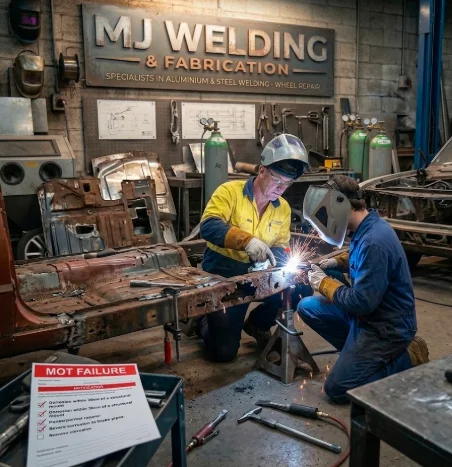
Car sills are the structural steel panels running underneath the doors along each side of your vehicle. Rusty or damaged car sills can weaken the vehicle’s structure, affect safety and cause an MOT failure. In many cases, rotten sills can be repaired by cutting out the damaged metal and welding in new steel, with typical UK costs ranging from £150–£300 for a small patch repair to £300–£700 or more for a full outer sill replacement per side.
The important thing is to identify how far the corrosion has spread. Surface rust may need relatively minor attention, while badly corroded inner and outer sills can require extensive structural welding.
What Are Car Sills and Why Are They Important?
Car sills are the metal sections positioned underneath the doors, connecting the front and rear sections of the vehicle’s body. Although they are often hidden by the door openings or plastic trims, they play an important role in the vehicle’s construction.
Their main functions include:
- Structural strength: Sills help maintain the rigidity of the vehicle’s body.
- Crash protection: They contribute to the strength of the passenger compartment during certain types of impact.
- Body stiffness: Sound sills help prevent excessive movement and flexing of the vehicle’s body.
- Jacking support: Some vehicle manufacturers specify jacking points around the sill area.
When car sills become rotten, the damage can affect more than the vehicle’s appearance. Corrosion around structural areas can compromise the strength of the body and make the vehicle unsafe.
Why Do Car Sills Rust?
Rust develops when steel is exposed to moisture and oxygen. Unfortunately, car sills are particularly vulnerable because they sit close to the road and can collect dirt, water and road salt.
In our workshop, we often see corrosion that has developed from inside the sill rather than starting on the visible outer surface.
Common causes include:
- Trapped water and mud: Moisture and dirt collect inside sill cavities, allowing corrosion to develop.
- Road salt: Salt used during winter accelerates the corrosion process.
- Stone chips: Small impacts remove protective paint and expose bare steel.
- Blocked drain holes: Drainage openings allow water to escape. When blocked, moisture can remain trapped.
- Age: Older vehicles may have weakened factory corrosion protection.
- Poor previous repairs: Filler, unsuitable patches or inadequate rust treatment can allow corrosion to return.
Rust can remain hidden underneath paint, underseal and plastic sill covers for a long time. By the time visible damage appears, the corrosion may already have spread.
Signs Your Car Sills Need Repair
Recognising early warning signs can help prevent a relatively small repair from becoming an expensive replacement job.
Look for these common symptoms:
- Bubbling paint: Small paint bubbles may indicate corrosion underneath.
- Orange or brown stains: Rust marks around the lower door openings can suggest developing sill corrosion.
- Visible holes: Perforation means the metal has already deteriorated significantly.
- Flaking metal: Rusty sections may peel away or break apart when inspected.
- Soft or weak areas: Metal that has lost its strength may move or crumble under pressure.
- Changes in door gaps: Severe structural corrosion can affect body alignment.
- Unusual creaking: Body movement or noises may indicate a structural issue, although other faults can cause similar symptoms.
- Suspicious filler or plastic covers: Previous cosmetic repairs may be hiding corrosion underneath.
If you notice these signs, arrange an inspection rather than waiting for your next MOT.
Can Rusty Car Sills Cause an MOT Failure?
Yes. Corrosion affecting structural parts of a vehicle, including its sills, can result in an MOT failure.
The MOT inspection considers the location, severity and extent of corrosion. Damage is particularly concerning when it affects prescribed structural areas or is close to important components such as:
- Seatbelt mountings and anchorage points.
- Suspension mounting points.
- Load-bearing structural sections.
- Other areas that contribute to the vehicle’s safety and integrity.
A minor surface rust issue does not automatically mean an MOT failure. However, holes, weakened metal and significant corrosion in structural areas can result in a major or dangerous defect.
Can you drive a car after an MOT failure?
This depends on the MOT result and the vehicle’s condition.
- A dangerous defect means the vehicle must not be driven on the road.
- A major defect means the vehicle has failed its MOT. Whether it can be driven depends on whether its existing MOT remains valid and whether it is otherwise roadworthy.
- If the previous MOT has expired, you generally cannot drive it except in limited circumstances, such as travelling to a pre-booked MOT test, provided the vehicle is roadworthy.
Always check the applicable rules before moving a failed vehicle. [VERIFY MOT RULES ON GOV.UK]
If rusty car sills have caused an MOT failure, professional structural welding may be necessary before the vehicle can pass a retest.
Car Sills Repair: Patch Repair or Full Replacement?
Not every rusty sill needs replacing completely. The right repair depends on how much metal has deteriorated and whether the inner sill is also affected.
Small patch repairs
If corrosion is limited to a small section and the surrounding metal remains structurally sound, a localised repair may be possible.
The damaged section is cut out and replaced with appropriately prepared steel. This can be a more affordable option when the corrosion has not spread further.
Full sill replacement
When corrosion affects a larger section, replacing the outer sill panel may be necessary. If the inner sill is also rotten, additional structural welding will be required.
A full replacement involves more preparation and welding, particularly where access is restricted or other body panels need to be removed.
| Sill condition | Recommended work | Typical cost per side |
|---|---|---|
| Minor localised rust damage | Small patch repair | £150–£300 |
| Moderate outer sill corrosion | Larger steel patch repair | £250–£450 |
| Extensive outer sill corrosion | Full outer sill replacement | £300–£700 |
| Inner and outer sill damage | Structural sill replacement | £500–£1,200+ |
Indicative UK estimates only. Actual prices depend on the vehicle, extent of corrosion and finishing requirements. [CHECK PRICE]
When is a car not worth repairing?
Sometimes the corrosion is too extensive to justify the cost.
For example, an older vehicle might have rotten sills, corroded floor sections, damaged suspension mounting areas and other serious structural problems.
If the combined repair cost is higher than the vehicle’s value, replacement may make more financial sense.
A good workshop should explain the full extent of the damage before recommending expensive work.
How Professional Car Sills Welding Works
Proper sill repair involves removing weakened steel and restoring the affected section using suitable replacement metal.
At MJ Welding & Fabrication, the process generally involves several stages.
1. Inspection and corrosion assessment
The affected sill is inspected to identify visible and hidden rust. Where necessary, surrounding trims or panels may need to be removed to establish how far the corrosion has spread.
2. Cutting out rotten metal
The weakened sections are carefully removed until sound metal is reached. Welding onto heavily corroded steel is not a suitable long-term repair.
3. Preparing replacement steel
New steel sections or suitable replacement sill panels are measured, shaped and prepared to fit the damaged area.
4. MIG welding
MIG welding is commonly used for automotive steel repairs. It allows the welder to join replacement steel sections to the vehicle’s existing sound metal.
The workshop’s MIG welding service is relevant to this type of automotive fabrication and repair work.
5. Sealing and rust protection
After welding, the repaired area needs suitable protection to help prevent moisture from causing further corrosion.
This can include seam sealing, suitable primers and corrosion protection inside accessible cavities.
6. Finishing and painting
The final appearance depends on the work required and the service agreed with the workshop. Always confirm whether preparation, painting and finishing are included in the quotation. [CHECK: confirm whether paint/finish is offered]
For larger repairs involving surrounding damaged panels, car body panel replacement may also be required.
Why Filler and Fibreglass Are Not Proper Sill Repairs
When rusty car sills develop holes, some people try to hide the damage using body filler, fibreglass or stick-on plastic covers.
These products may improve the appearance temporarily, but they do not restore the strength of rotten structural steel.
The problems include:
- Rust continues spreading underneath the repair.
- Filler cannot replace the strength of properly welded steel.
- Fibreglass does not restore the original structural integrity.
- Plastic covers can hide corrosion and make inspection more difficult.
- Poor repairs may lead to further deterioration and another MOT failure.
If the sill is structurally damaged, the correct approach is to remove the weakened metal and replace it with suitable steel.
How Much Does Car Sills Repair Cost in the UK?
The cost of repairing car sills depends on the amount of rust, the vehicle and the work involved.
Here are some of the main factors that affect the final quotation:
- Extent of corrosion: A small hole costs less to repair than a completely rotten sill.
- Inner and outer sill damage: Repairs involving both sections require more labour and materials.
- Vehicle make and model: Replacement panels and access requirements vary between vehicles.
- Access: Some vehicles require additional dismantling to reach the damaged sections.
- Finishing work: Priming, seam sealing, underbody protection and painting can increase the overall cost.
- Classic vehicles: Older or classic cars may require custom-made sections because replacement panels are difficult to source.
How long does sill welding take?
The time required depends on the damage.
| Type of repair | Approximate time |
|---|---|
| Small patch repair | 2–4 hours |
| Larger localised sill repair | Half a day to one day |
| Full outer sill replacement | 1–2 working days |
| Inner and outer sill replacement | 2–4 working days or longer |
These are general workshop estimates. Additional bodywork, hidden corrosion and finishing requirements can extend the turnaround time.
Customers around Stourbridge often ask whether a rusty sill can be repaired in a single day. A small repair may be possible, but extensive structural work needs proper preparation and should never be rushed.
How to Prevent Rust on Car Sills
Although some corrosion is unavoidable as vehicles age, regular maintenance can help slow it down.
Follow these practical tips:
- Wash underneath your vehicle: Remove mud, dirt and road salt, particularly during winter.
- Keep drain holes clear: Make sure water can escape from sill cavities.
- Repair paint chips early: Exposed steel can begin corroding if left untreated.
- Use corrosion protection: Suitable cavity wax and underbody protection can help protect vulnerable areas.
- Inspect after damage: Check the sill if the vehicle has been struck by road debris or damaged by a kerb.
- Avoid trapped moisture: Keep the underside clean and address damaged protective coatings promptly.
If your vehicle is stored outside, periodic inspections are particularly worthwhile.
How to Choose a Workshop for Car Sills Repair
Structural sill repairs require more than basic cosmetic bodywork. The person carrying out the work should understand automotive steel, welding preparation and vehicle construction.
Before agreeing to a repair, look for:
- Experience with automotive structural welding.
- A proper inspection before work begins.
- A clear explanation of the corrosion and repair method.
- A quotation that identifies any additional finishing costs.
- Honest advice if the vehicle is too badly corroded to justify repairing.
MJ Welding & Fabrication has 15+ years of experience in steel and aluminium welding, working with cars, vans and camper vans.
The workshop handles sill and wheel arch welding, MOT-related corrosion repairs and body panel replacement. Each job needs an individual assessment because the visible rust does not always show the full extent of the damage.
Conclusion: Don’t Ignore Rusty Car Sills
Car sills are important structural parts of your vehicle, and corrosion should never be treated as just a cosmetic problem. Small patches of rust can develop into holes and weakened steel, potentially affecting safety and causing an MOT failure.
Fortunately, many rusty sills can be repaired by removing the damaged metal and welding in suitable replacement steel. Depending on the damage, costs can range from around £150 for a small patch repair to £1,200 or more for extensive inner and outer sill replacement.
If you notice bubbling paint, holes, flaking metal or other signs of corrosion, arrange an inspection before the damage becomes more extensive.
MJ Welding & Fabrication can assess your vehicle and explain whether patch repairs or full sill replacement are appropriate.
Frequently Asked Questions
1. How much does it cost to repair car sills in the UK?
Small sill patch repairs typically cost around £150–£300 per side. Full outer sill replacement can cost £300–£700, while extensive inner and outer sill repairs may exceed £1,200.
2. Can rusty car sills be welded?
Yes. Rotten sections can often be cut out and replaced with new steel using suitable automotive welding techniques, provided the surrounding structure is sound enough for a safe repair.
3. Will rusty car sills fail an MOT?
They can. Significant corrosion, holes or weakened metal in structural areas can result in an MOT failure. The result depends on the damage’s location and severity.
4. How long does car sill repair take?
A small patch repair may take 2–4 hours. Full sill replacement can take one or more working days, depending on the vehicle and extent of corrosion.
5. Is it worth repairing rusty car sills?
It can be worthwhile if the vehicle is otherwise in good condition and the repair cost is reasonable compared with its value. Extensive corrosion elsewhere may make replacement a better option.
Rusty car sills?
Get professional advice from MJ Welding & Fabrication.
Call 07532 794934