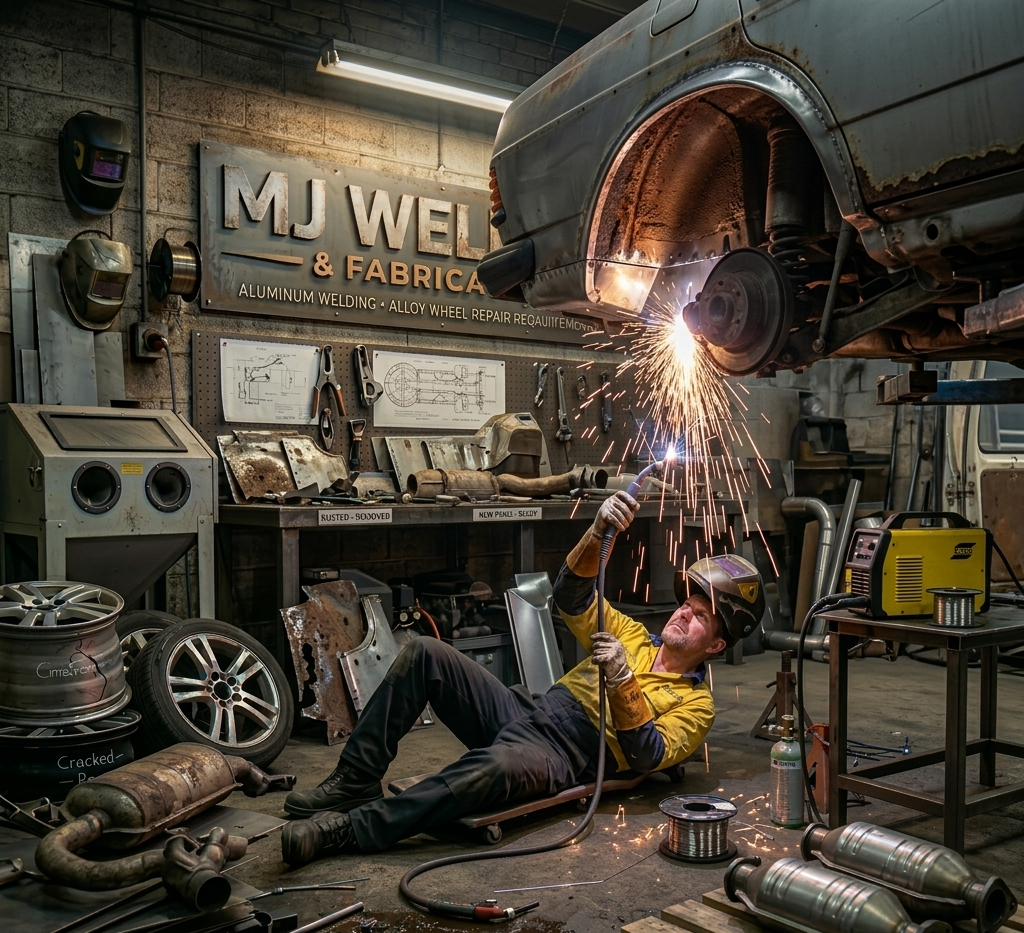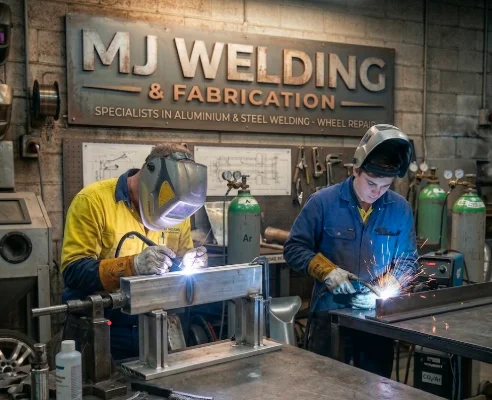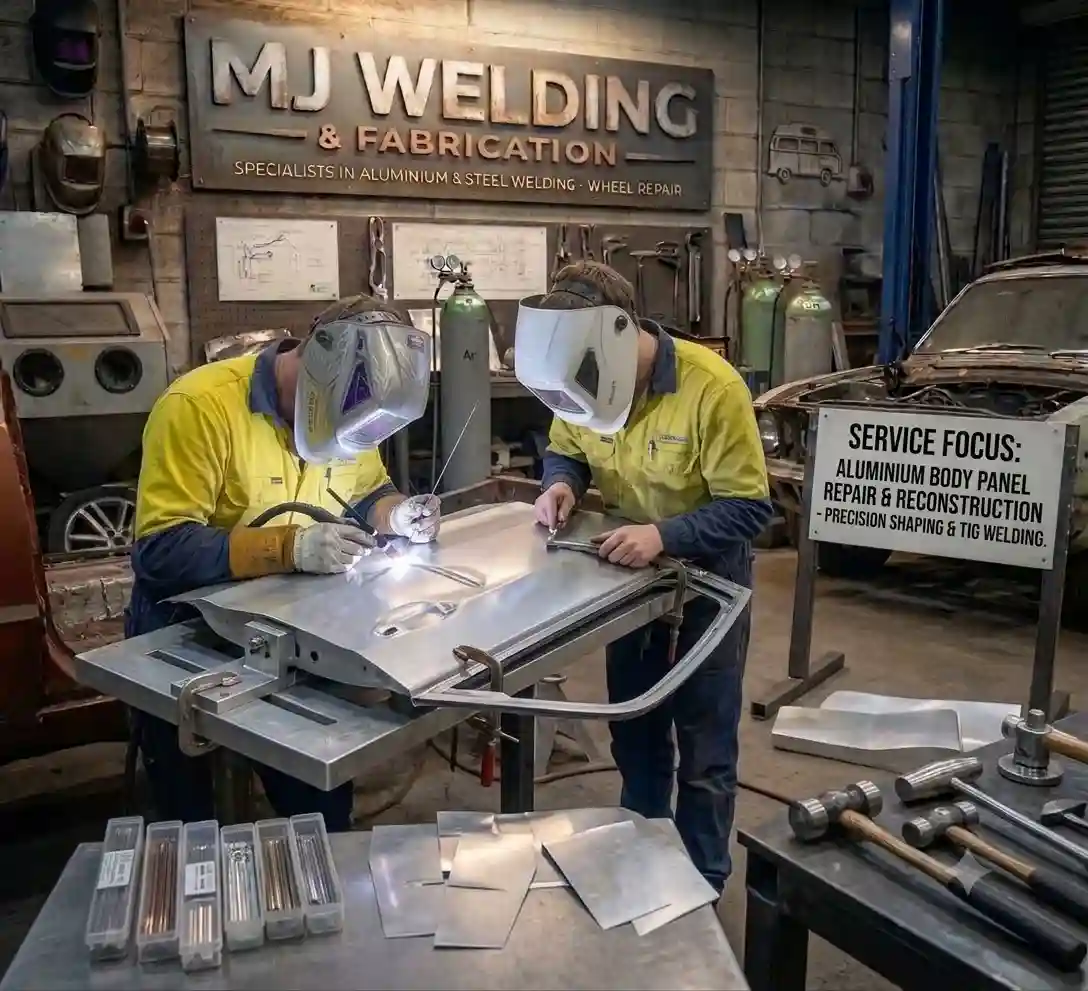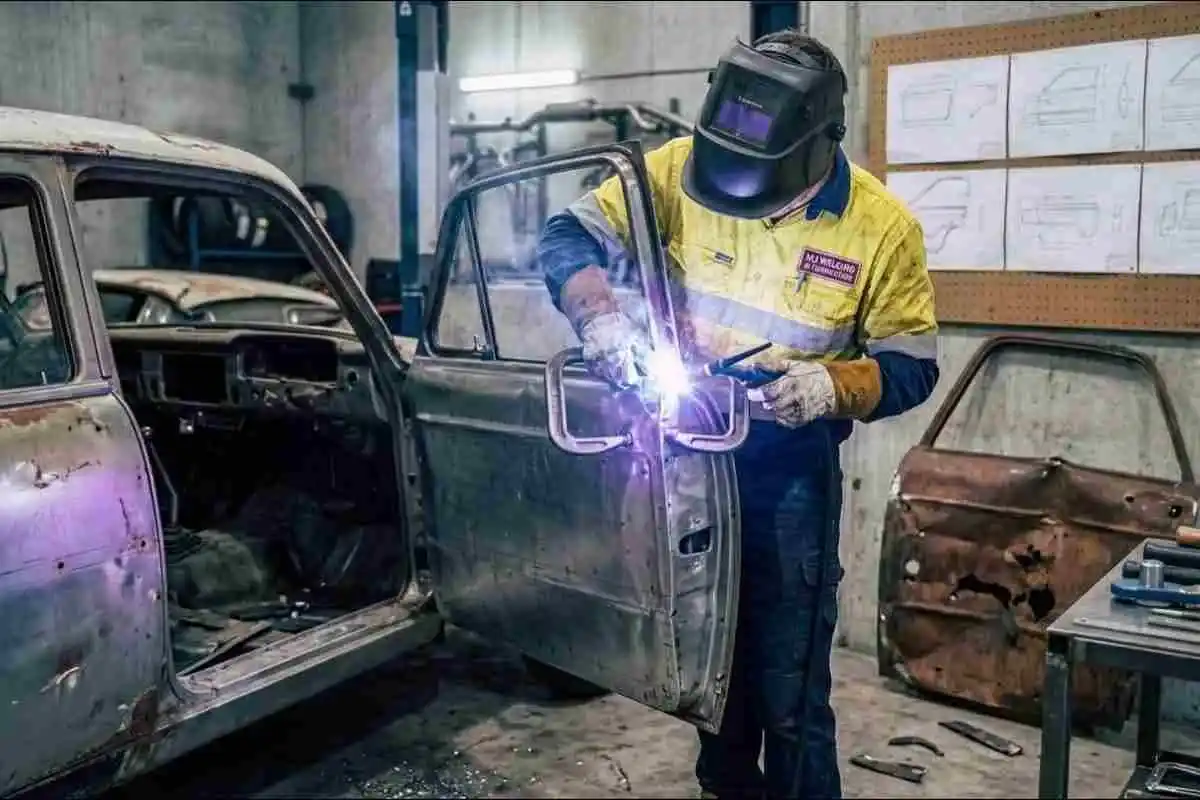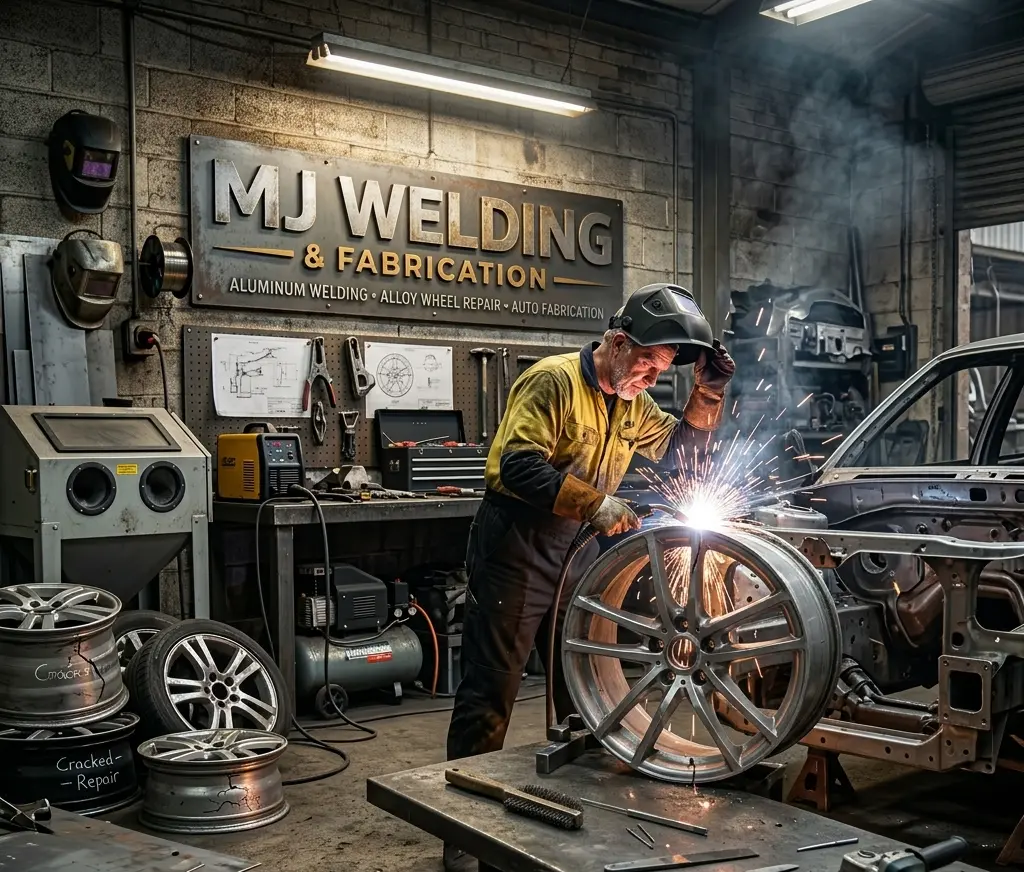
Aluminium and alloy components are everywhere on modern and performance vehicles — wheels, chassis sections, engine parts and body panels are increasingly built from alloy rather than steel. It’s lighter, more fuel-efficient, and often more expensive to replace than to repair. But alloy behaves very differently to steel under heat, and a repair carried out with the wrong technique can weaken the metal permanently rather than restore it.
At MJ Welding & Fabrication, we provide specialist alloy welding and fabrication services across Stourbridge, Birmingham, Dudley, Halesowen, Wolverhampton and the wider West Midlands. This guide explains why alloy repairs need a different approach to standard steel welding, the most common alloy problems we see, and how to know whether your vehicle needs a repair specialist rather than a general bodywork shop.
Why Alloy Welding Is Different to Steel Welding
Aluminium alloy has a much lower melting point than steel, conducts heat far more quickly, and doesn’t change colour as it heats up the way steel does — which makes it much easier to blow a hole through the metal if you’re not using the right equipment, settings and technique.
Alloy also oxidises almost instantly when exposed to air, forming a layer that has to be properly cleaned away before welding, or the weld simply won’t bond correctly. Get any of this wrong, and the result is a repair that looks fine on the surface but fails under load — which, on a wheel, chassis component or structural panel, isn’t something you want to discover on the road.
This is why we go into more detail on the differences between aluminium and steel welding separately — the two processes require different skills, different equipment settings, and a different level of attention to heat control.
Common Alloy Problems We Repair
Cracked or chipped alloy wheels. Kerb damage, potholes and general wear are the most frequent causes of alloy wheel cracking, and it’s one of the most common alloy repairs we carry out. We explain the underlying causes in more detail in our guide on what causes alloy wheel cracks.
Buckled or bent alloy rims. Impact damage from potholes or kerbs can distort the rim without necessarily cracking it outright, affecting the wheel’s balance and tyre seal.
Corroded alloy wheels. Alloy doesn’t rust like steel, but it does corrode — particularly around the wheel rim and where road salt and brake dust build up over time.
Aluminium chassis and structural components. Increasingly common on newer vehicles, aluminium chassis sections need precise heat control during repair to avoid warping or weakening the surrounding structure. Our aluminium chassis repair service is built specifically around this challenge.
Aluminium body panels. Some manufacturers use aluminium panels for weight saving, and these require a different repair approach compared to a standard steel panel replacement.
Signs Your Alloy Wheel or Component Needs Repair
- Visible cracks, especially around the spokes or rim edge
- A slow leak of air pressure with no obvious puncture
- Vibration through the steering wheel at speed
- Visible kerb damage or a bent-looking rim
- Corrosion or pitting around the wheel’s edge
- An MOT advisory referencing wheel or rim damage
If you notice any of these, it’s worth getting the wheel or component properly assessed before it’s driven further — a small crack under load can spread quickly, and a wheel failure at speed is a serious safety risk. This is also worth checking against your MOT paperwork: government MOT guidance treats wheel and rim damage as a safety-relevant defect category, and it’s covered alongside broader corrosion and structural checks on the official GOV.UK MOT inspection manual.
How We Approach Alloy Welding & Fabrication
1. Full assessment first. We inspect the extent of the damage, the alloy grade where relevant, and whether the component is a safe candidate for repair or needs replacing outright. Not every crack can or should be welded — safety always comes first.
2. Proper surface preparation. Because aluminium oxidises so quickly, the area around the repair is thoroughly cleaned before any welding begins, to make sure the weld actually bonds to solid metal.
3. Precision heat control. Alloy welding relies on careful, consistent heat input. Too little, and the weld won’t fuse properly; too much, and you risk warping or weakening the surrounding metal. This is where experience with alloy specifically — not just welding in general — makes the difference.
4. Structural rebalancing where needed. For wheels in particular, we check balance and structural integrity after the repair, not just the visual finish, since a wheel that looks repaired but isn’t properly balanced can cause vibration and uneven tyre wear.
5. Clear explanation of the repair. Every customer is told exactly what was found, what was repaired, and — just as importantly — if something isn’t a safe candidate for repair and needs replacing instead.
We take the same structural approach with alloy work as we do with our structural welding and MIG welding services — proper assessment, proper technique, and honesty about what a repair can and can’t achieve.
TIG vs MIG Welding for Alloy Repairs
Both TIG and MIG welding can be used on aluminium, but they suit different jobs. TIG welding gives far greater control over heat input and weld precision, which is why it’s often the preferred method for alloy wheel repairs, thin sections and anywhere a clean, controlled finish matters. MIG welding, on the other hand, tends to be faster and better suited to larger structural aluminium sections where speed and weld strength across a larger area are the priority. We cover this comparison in more depth in our guide on TIG vs MIG welding for cars, which explains why choosing the right process for the job — rather than using whichever machine happens to be set up — makes a real difference to the strength and appearance of an alloy repair.
Our workshop is equipped to carry out both TIG welding and MIG welding, so the process is chosen based on what the specific alloy repair actually needs, not on convenience.
Alloy Fabrication Beyond Wheel Repair
Alloy welding isn’t limited to wheels. We regularly carry out broader aluminium fabrication work, including custom brackets, structural reinforcement, and one-off fabricated parts where an aluminium component has failed, corroded beyond repair, or simply doesn’t exist as an off-the-shelf replacement. This kind of fabrication work draws on the same precision heat control and material knowledge as our wheel and chassis repairs, just applied to a bespoke part rather than a standard component. If you’re restoring a classic car with aluminium trim or fittings, or need a specific bracket or fitting fabricated rather than repaired, this is work we handle on a case-by-case basis after assessing the part and its intended use.
Why Choose MJ Welding & Fabrication for Alloy Work
Alloy repair is a specialist skill, not a general bodywork add-on. Every alloy job that comes through our workshop is assessed individually, welded using equipment and technique suited specifically to aluminium, and checked for structural soundness — not just appearance — before it goes back on the road. We’re upfront when a repair isn’t the safe option, and we explain exactly what’s been found and what’s been done on every job, so customers aren’t left guessing about the condition of a safety-critical component like a wheel or chassis section.
When Repair Isn’t the Right Answer
Not every piece of alloy damage should be welded. Cracks that run through a wheel’s structural load-bearing area, or damage that’s spread too far to repair safely, sometimes mean replacement is the safer and more sensible option. Part of our job is being upfront about this — a repair that looks convincing but isn’t structurally sound is far more dangerous than simply replacing the component. We’d rather tell a customer a wheel needs replacing than carry out a repair that won’t hold up.
Alloy Welding Across the West Midlands
We carry out alloy wheel repair, aluminium chassis work and general alloy fabrication for customers across Stourbridge, Birmingham, Dudley, Halesowen, Wolverhampton, Walsall and Solihull, along with the surrounding towns and villages across the region. You can see the full list of areas we serve on our service areas page, and read more about why drivers across the West Midlands trust MJ Welding with this kind of specialist repair work.
Why Alloy Repair Should Only Be Done by a Specialist
General bodywork shops don’t always have the equipment, experience or heat-control knowledge specific to aluminium and alloy repair. Given how quickly alloy can be weakened by incorrect welding, and how safety-critical wheels and structural components are, this isn’t an area where it’s worth cutting corners on who carries out the work. Independent welding bodies such as TWI (The Welding Institute) highlight aluminium’s sensitivity to heat input and the specialist technique required compared with standard steel welding — which is exactly why alloy repair work needs a welder with specific experience in this material, not just general bodywork skills.
Preventing Alloy Wheel and Component Damage
While some alloy damage is unavoidable, a few simple habits reduce how often repairs are needed:
- Take corners and speed bumps carefully — kerb strikes are the single biggest cause of alloy wheel cracking and rim damage.
- Check tyre pressures regularly — underinflated tyres increase the risk of rim damage on potholes and uneven road surfaces.
- Clean brake dust and road salt off wheels periodically — buildup accelerates corrosion around the rim and spoke edges over time.
- Get any suspected damage checked early — a hairline crack caught early is often a straightforward repair; left unchecked, it can spread and turn into a replacement job.
These small habits won’t eliminate the need for alloy repair altogether, but they do reduce how often more serious structural damage develops.
Frequently Asked Questions
Can a cracked alloy wheel always be welded? Not always. It depends on where the crack is located and how far it’s spread. Cracks in non-structural areas can often be repaired safely, while damage through load-bearing sections may mean replacement is the safer option.
Is alloy welding more expensive than steel repairs? It can be, mainly because it requires specific equipment and more careful technique. However, it’s usually still significantly cheaper than replacing an alloy wheel, chassis component or panel outright.
How long does an alloy wheel repair take? Straightforward crack or kerb damage repairs are often completed within a day, though this depends on the extent of the damage and whether rebalancing is needed afterwards.
Do you repair aluminium chassis components as well as wheels? Yes. Alongside alloy wheel repair, we carry out aluminium chassis and structural component repair, which requires the same careful heat control but on a larger structural scale.
How do I know if my wheel damage is repairable? The only reliable way is a hands-on inspection. Photos can miss the true extent of a crack, particularly around the inside of the rim or spoke junctions.
Is TIG or MIG welding better for alloy wheels? TIG welding is generally preferred for alloy wheels because it offers more precise heat control, which matters on thinner sections and spoke areas. MIG welding is better suited to larger aluminium structural sections where speed and coverage matter more than fine control.
Can you fabricate custom aluminium parts, not just repair existing ones? Yes. Alongside repairs, we carry out bespoke aluminium fabrication for brackets, structural reinforcement and one-off components where an off-the-shelf replacement isn’t available or practical.
Will an alloy wheel repair affect its balance? It can, which is why we check and correct balance as part of the repair process rather than treating the weld itself as the finished job.
Book an Alloy Repair Assessment
If you’ve got a cracked, kerbed or corroded alloy wheel, or an aluminium structural component that needs assessing, get in touch with our team for an honest, hands-on inspection before any work begins. You can also explore our full range of welding and fabrication services, or read more repair guidance on our blog.