A cracked alloy wheel is one of those problems that often gets ignored longer than it should. It might start as a small hairline mark you barely notice, or a slow, mysterious loss of tyre pressure you keep topping up. But alloy wheel cracks don’t heal themselves, and left unaddressed, they can grow, fail under load, and turn into a genuine safety hazard.
At MJ Welding & Fabrication in Lye, Stourbridge, alloy wheel crack repair is one of our most requested services, and the same handful of causes come up again and again. In this guide, we’ll walk through exactly what causes alloy wheels to crack, how to spot the early signs, whether it’s safe to keep driving, and — most usefully — how to prevent it from happening in the first place.
What Are Alloy Wheels Made From, and Why Do They Crack?
Alloy wheels are typically cast from an aluminium alloy, sometimes blended with magnesium, chosen for its light weight, corrosion resistance, and heat dissipation compared to traditional steel wheels. The trade-off is that aluminium is more brittle under sudden impact than steel — where a steel wheel might bend or dent, an aluminium alloy wheel is more prone to cracking, particularly around the rim edge, spokes, or the area where the wheel meets the tyre bead. You can read more about how aluminium behaves differently to steel in our guide on aluminium vs steel welding.
7 Common Causes of Alloy Wheel Cracks
1. Pothole and Kerb Impacts
This is by far the most common cause we see. A hard strike against a pothole, raised drain cover, or kerb sends a sudden, concentrated shock through the wheel. Even if there’s no obvious dent, that impact can create a hairline crack that isn’t visible until it’s grown or started leaking air.
2. Manufacturing Defects or Porosity
Occasionally, cracks originate from tiny voids or inconsistencies introduced during the original casting process. These defects can sit dormant for years before finally giving way under normal stress, which is why even a well-maintained wheel can develop a crack seemingly out of nowhere.
3. Corrosion Weakening the Structure
Road salt, moisture, and general wear can corrode the alloy over time, particularly around the wheel’s inner barrel and bead seat. As the metal thins and weakens from corrosion, it becomes far more susceptible to cracking under everyday driving stress.
4. Incorrect Tyre Pressure
Underinflated tyres transfer more shock directly into the wheel rim, since there’s less air cushioning the impact. Overinflated tyres can also place uneven stress on the wheel structure. According to TyreSafe, the UK’s tyre safety charity, correct tyre pressure isn’t just about handling and fuel economy — it’s a genuine safety factor that also protects the wheel itself from impact damage.
5. Excessive Heat From Braking
Aggressive or prolonged braking, particularly on long descents or during track driving, generates significant heat that transfers into the wheel. Repeated heat cycling can weaken the alloy structure over time, making it more prone to cracking under subsequent impacts.
6. Poor-Quality Aftermarket Repairs
A wheel that’s been previously repaired using the wrong process, insufficient preparation, or low-quality filler rather than proper welding is significantly more likely to crack again, often in the same spot. This is one of the most preventable causes — and one of the most common things we’re asked to fix properly the second time around.
7. Age and Metal Fatigue
Like any metal component subjected to repeated stress over years of driving, alloy wheels experience gradual fatigue. Older wheels, particularly those that have absorbed several minor impacts over their lifespan, are statistically more likely to develop a crack than newer ones.
How to Tell If Your Alloy Wheel Is Cracked
A few signs are worth checking for regularly, and especially after any hard impact:
- Persistent slow air loss from a tyre with no obvious puncture
- Vibration through the steering wheel at speed, particularly if it’s new or worsening
- A hissing sound near the wheel, especially when stationary
- A visible hairline crack, often near the rim edge, spoke junctions, or valve stem area
- A recent MOT advisory or failure referencing wheel condition
Independent guidance on wheel damage generally recommends treating any visible crack as urgent, since cracks can grow under load and heat and the safety risk depends heavily on their exact location and severity. If you spot any of these signs, our page on alloy wheel crack repair explains what happens next.
Is It Safe to Drive on a Cracked Alloy Wheel?
In short — not for any longer than it takes to get it assessed. A cracked wheel can fail suddenly and without warning, particularly under load, heat, or a further impact, and the consequences of a wheel failure at speed can be severe. Wheels are also assessed as a safety item during your MOT, so a cracked alloy can result in a straightforward failure. If you notice any of the warning signs above, it’s best to reduce your speed, avoid further journeys where possible, and get the wheel inspected as soon as you can.
How Alloy Wheel Crack Repair Works
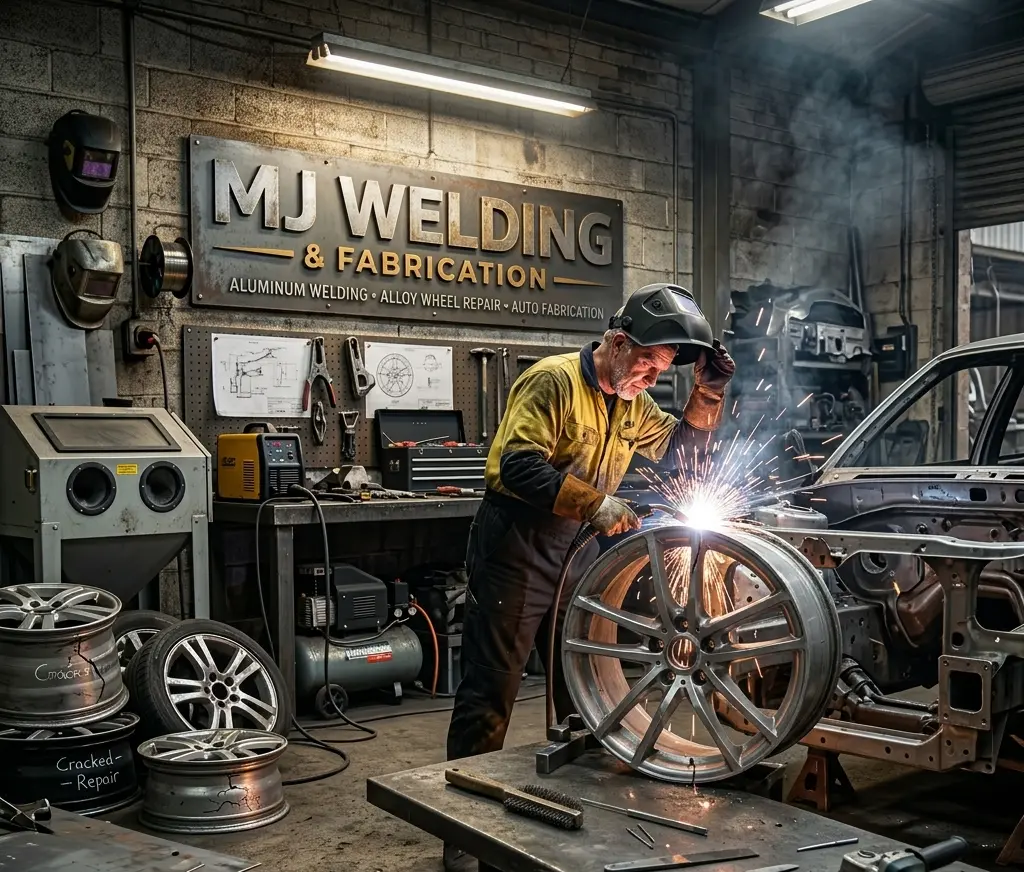
Because alloy wheels are cast aluminium, repairing a crack correctly requires TIG welding — the precise, controlled process suited to aluminium’s lower melting point and higher thermal conductivity. You can read more about why this process matters on our TIG welding page and our comparison guide on TIG vs MIG welding for cars.
The typical repair process involves:
- Inspection to assess the crack’s location, depth, and whether the wheel is a safe candidate for repair
- Preparation, cleaning back the affected area to remove the oxide layer and any contamination
- TIG welding the crack using the correct aluminium filler material
- Machining or finishing the repaired area to restore the original profile
- Balancing and final inspection before the wheel goes back into service
Alloy Wheel Crack Repair vs Replacement: Which Is Better?
Not every cracked wheel is a good candidate for repair. As a general rule, cracks in non-structural cosmetic areas can often be welded safely and effectively. However, cracks in critical load-bearing areas, multiple cracks on the same wheel, or wheels with significant prior damage may be safer to replace outright. A proper inspection is the only reliable way to know which route is right for your specific wheel — we’ll always give you an honest answer rather than repairing something that shouldn’t be repaired.
Alloy Wheel Crack Repair Cost
Alloy wheel crack repair is generally one of the more affordable welding services we offer, particularly compared to full wheel replacement. For a full breakdown of typical UK pricing across our services, including alloy wheel repair, see our 2026 car welding price guide. You can also see more detail on our alloy wheel crack repair Stourbridge page, our alloy rim crack repair page, and our general alloy wheel page.
How to Prevent Alloy Wheel Cracks
A few simple habits go a long way in reducing your risk:
- Check tyre pressure monthly and before long journeys — correctly inflated tyres absorb more shock before it reaches the wheel
- Slow down for potholes, speed bumps, and raised drains where possible, rather than driving over them at speed
- Avoid kerbing wheels when parking, particularly on alloy-friendly (rather than plastic-covered) wheels
- Inspect your wheels after any hard impact, even if nothing looks obviously wrong
- Clean brake dust and road salt regularly to reduce corrosion around the wheel barrel
- Consider rim protectors if you frequently drive in tight urban parking conditions
- Use a reputable specialist for any previous repairs, since poor-quality past repairs are a common cause of repeat cracking
Aluminium vs Steel: Why Alloy Wheels Need Specialist Welding
Alloy wheels can’t be repaired the same way as a steel bodywork panel. Aluminium’s lower melting point and different heat behaviour mean that using the wrong process — or an inexperienced welder — can produce a repair that looks fine but fails under load. Our guides on aluminium vs steel welding and aluminium and steel welding services explain this distinction in more detail, and it’s exactly why we only use TIG welding, carried out by experienced technicians, for every alloy wheel crack repair we take on.
Areas We Cover for Alloy Wheel Crack Repair
We carry out TIG welding and alloy wheel crack repair for customers across Stourbridge and the wider West Midlands, including:
Stourbridge & Dudley area: Stourbridge, Halesowen, Dudley, Kingswinford, Wollaston, Norton, Pedmore, Gig Mill, Wollescote, Pensnett and Rowley Regis.
Birmingham & suburbs: Birmingham, Harborne, Edgbaston, Bearwood, Quinton, Northfield, Bournville, Selly Oak, Kings Heath, Longbridge and Solihull.
Black Country & Staffordshire: Wolverhampton, Walsall, West Bromwich, Smethwick, Oldbury, Wednesbury, Bilston, Tipton and Penkridge.
Worcestershire & beyond: Bromsgrove, Redditch, Sutton Coldfield, Alvechurch, Shirley, Romsley, Clent, Blakedown, Worcester, Bridgnorth and Wyre Forest.
For our full, up-to-date coverage area, visit our service areas page, car welding near Stourbridge page, or West Midlands locations hub.
More Guides From MJ Welding & Fabrication
- How Much Does Car Welding Cost in Stourbridge? (2026 Price Guide)
- TIG vs MIG Welding for Cars: Which One Do You Actually Need?
- Aluminium vs Steel Welding: Key Differences Every Car Owner Should Know
- 7 Signs Your Car Needs Structural Welding Repair Right Now
- How to Tell If Your Car Sills Are Rusted (Before It Fails MOT)
- Professional Structural Welding
- Professional Aluminium Chassis Repair
- Professional Car Welding & Fabrication
- Why Car Owners Trust MJ Welding
- Why West Midlands Drivers Trust MJ Welding
- MOT Failure Welding Repairs in Stourbridge
- The Complete Guide to Automobile Welding
- The 5 Most Common Car Welding Repairs
- 10 Hidden Signs Your Car Needs Welding
- How to Choose the Right Car Welder
- Car Welding in Stourbridge: The Complete Guide
- Pre-MOT Structural Rust Checklist
About MJ Welding & Fabrication
MJ Welding & Fabrication is a specialist automotive welding and fabrication workshop based at Bromley St, Lye, Stourbridge, DY9 8HU, with over 15 years of experience in TIG, MIG, and ARC welding repairs. Alloy wheel crack repair is one of our core specialisms, alongside structural welding, chassis repair, and MOT corrosion work. We work on all makes and models, and every wheel we assess gets an honest recommendation — repair where it’s safe and sensible, replacement where it isn’t. Read more on our About Us page, browse our full range of services, or see our complete blog library.
Frequently Asked Questions
Can a cracked alloy wheel always be repaired?
Not always. Cracks in non-structural, cosmetic areas can often be safely welded, but cracks in critical load-bearing areas or wheels with multiple cracks may need replacing instead. A proper inspection determines which applies to your wheel.
How much does alloy wheel crack repair cost?
It’s generally one of our more affordable services compared to full wheel replacement. See our 2026 price guide for typical UK pricing.
Will a repaired alloy wheel crack again in the same place?
Not if it’s repaired correctly using proper TIG welding and the right technique. Repeat cracking is far more common after poor-quality repairs than after a professionally completed one.
How do I know if my wheel is losing air because of a crack?
Persistent slow air loss without an obvious puncture, especially combined with vibration or a visible mark on the wheel, is a strong sign the crack is affecting the tyre seal. Get it inspected rather than just continuing to top up the pressure.
Does a cracked alloy wheel affect my MOT?
Yes, wheels are assessed as part of the safety inspection. A cracked wheel can result in an MOT failure depending on its severity and location.
Can I drive to get my cracked wheel inspected, or should I get it recovered?
This depends on severity — a small hairline crack with no other symptoms may allow a short, careful drive at low speed, but if you’re experiencing vibration, air loss, or the crack is significant, it’s safer to arrange recovery or assessment on-site rather than risk further driving.
Book an Alloy Wheel Crack Assessment in Stourbridge
If you’ve noticed a crack, slow air loss, or vibration from one of your wheels, don’t wait for it to get worse. Contact MJ Welding & Fabrication today for an honest inspection and a clear, upfront quote.
📞 Call: +44 7532 794934 📍 Bromley St, Lye, Stourbridge DY9 8HU

4 Responses