Car bodywork welding and fabrication is what stands between a corroded, damaged panel and a vehicle that’s structurally sound, MOT-ready, and safe to drive. Whether it’s rust spreading through a sill, an accident-damaged wing, a cracked alloy wheel, or a panel that simply can’t be sourced as a replacement part, proper bodywork welding restores strength — not just appearance.
At MJ Welding & Fabrication, based in Lye, Stourbridge, we carry out car bodywork welding and fabrication for customers across the West Midlands, on everything from everyday hatchbacks to vans and camper van conversions. In this guide, we’re covering what bodywork welding actually involves, the most common repairs we handle, how to find a genuinely qualified specialist near you, and what to expect from the process.
What Is Car Bodywork Welding & Fabrication?
Car bodywork welding covers any repair where metal panels or structural sections are cut, joined, replaced, or reinforced. Fabrication extends this further — creating a new section or component from raw material where a replacement part doesn’t exist, doesn’t fit, or isn’t economically available. In practice, most bodywork jobs sit somewhere between the two: cutting out a corroded section, fabricating a replacement piece to match the original profile, and welding it in so the repair restores the panel’s original strength.
The key distinction from cosmetic bodyshop work is structural integrity. Filler and paint can hide a problem; welding actually fixes it. Our page on professional car welding and fabrication covers this philosophy in more detail — we only use butt-welding for structural repairs, because temporary fixes don’t hold up.
Common Car Bodywork Welding & Fabrication Repairs
Sills and Wheel Arches
By a clear margin, this is the most common bodywork repair we carry out — and the most common MOT failure point in the UK. Corrosion around the sills and arches develops fast in the West Midlands thanks to winter road salting and stop-start urban driving. Repairs are carried out with proper butt-welding and finished with cavity wax to slow future corrosion. See our sills and arch welding service and our guide on how to tell if your car sills are rusted.
Body Panel Repair and Replacement
Accident damage, deep corrosion, or panels that no longer sit flush often need sections cut out and replaced rather than filled. Our body panel repair service covers both steel and aluminium panels, restored to original strength.
Floor Pans
Water ingress, damp carpets, and a persistent musty smell inside the cabin usually point to floor pan corrosion — a structural issue that will fail an MOT once it progresses. This is a common bodywork fabrication job, since sections often need to be shaped to match the original contour.
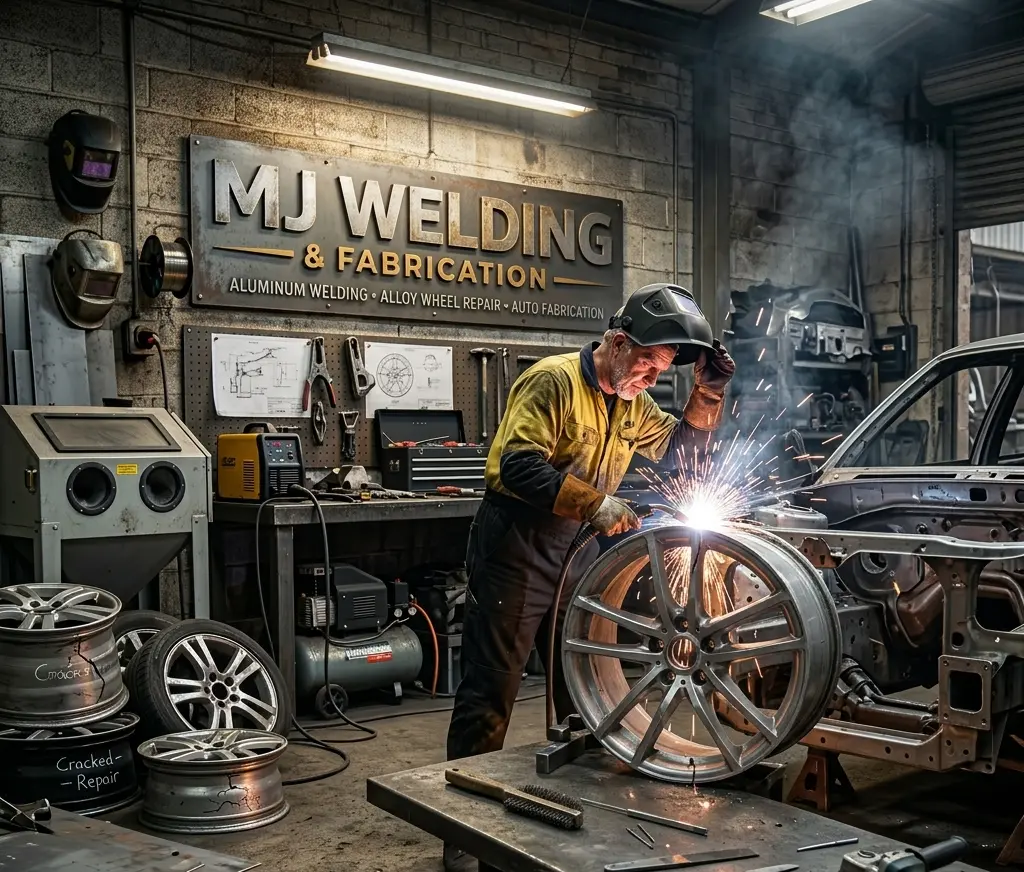
Alloy Wheel Crack Repair
Cracked alloys are more common than most drivers realise, usually caused by pothole or kerb impacts. Professional TIG welding restores structural integrity, typically taking around 2-3 hours per wheel. See our alloy wheel crack repair service and our guide on what causes alloy wheel cracks.
Exhaust Repairs
Cracked or leaking exhausts are noisy, inefficient, and can be dangerous. Bracket and mounting repairs are usually a quick job, often completed within 1-2 hours.
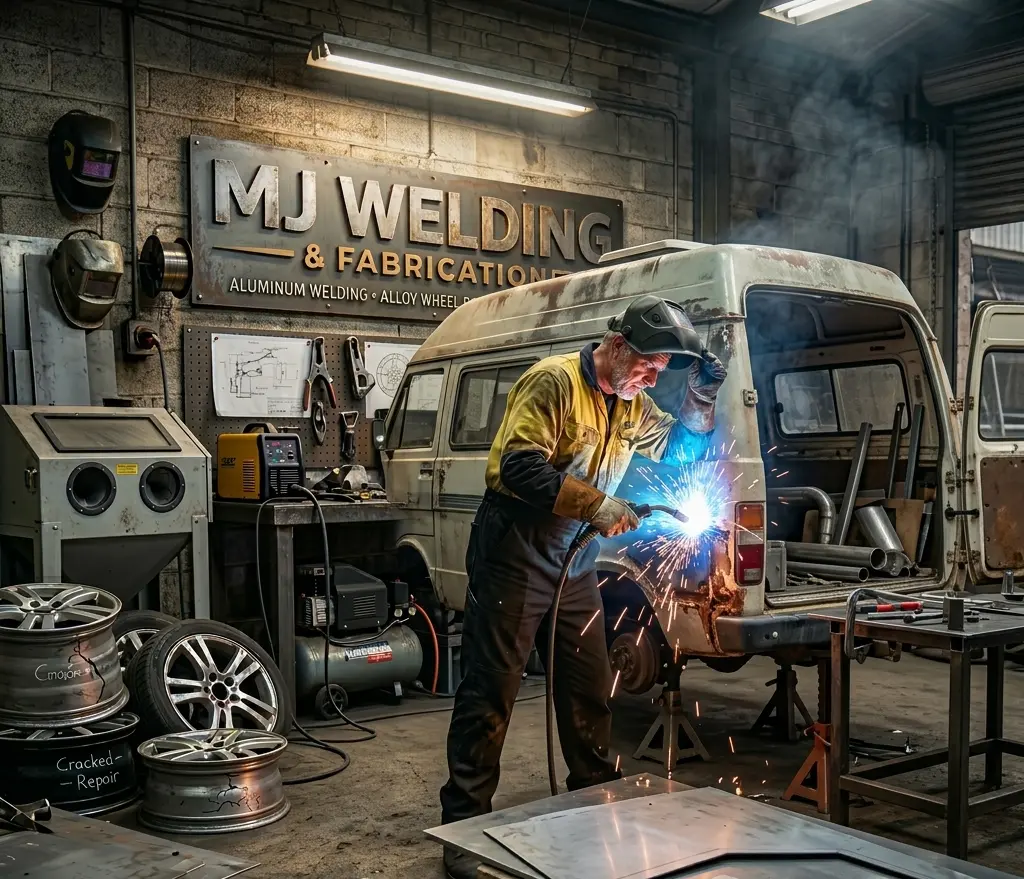
Camper Van Bodywork
Camper vans and conversions bring their own structural challenges — heavier loads, more moisture, and complex conversion work affecting outriggers, step wells, and body mounts. Our camper van welding service covers this specialism.
Steel vs Aluminium Bodywork: Why the Material Matters
Not all bodywork is the same metal, and this changes everything about how it’s repaired. Most structural panels — sills, arches, floor pans — are steel, best repaired with MIG welding. Increasingly, however, bonnets, doors, wings, and even entire chassis structures on premium vehicles are aluminium, which requires TIG welding and completely different handling. Most general garages can do MIG; far fewer can properly TIG weld aluminium.
Our guides on aluminium vs steel welding and TIG vs MIG welding for cars explain this distinction in plain terms, and our page on professional aluminium chassis repair covers aluminium structural work in more depth.
Bodywork Welding for MOT Repairs
A large share of the bodywork welding we carry out is directly tied to MOT testing. Structural corrosion around the sills, floor pans, and mounting points is one of the most common reasons vehicles fail, and these aren’t just paperwork problems — they compromise crash safety and handling. Our guide on MOT welding repairs explained breaks down exactly what testers assess, based on the official DVSA MOT inspection manual, and our page on why cars fail their MOT on corrosion covers the most frequent failure points.
Importantly, a proper assessment identifies all corroded areas — not just the obvious ones. Rust regularly hides behind underseal or paint, which is why a physical inspection matters far more than a phone estimate.
Bodywork Welding vs Bodyshop Filler: What’s the Difference?
This is worth being clear about. A traditional bodyshop may repair a corroded or damaged panel using filler, primer, and paint — which looks excellent and is entirely appropriate for cosmetic dents and scrapes. But where corrosion has penetrated the metal, or where the panel is structural, filler doesn’t restore strength. An MOT tester will fail a filled structural panel just as readily as an untreated one. Bodywork welding replaces the compromised metal itself, which is the only repair that genuinely restores integrity.
How to Find Quality Car Bodywork Welding Near You
A few questions are worth asking before booking:
- Do they carry out both MIG and TIG welding, or only MIG?
- Do they butt-weld structural repairs, or patch over them?
- Is the quote based on a physical inspection, not a phone description?
- Do they specialise in welding, or is it a side service alongside general mechanics?
- Do they offer a warranty on completed work?
Our guide on how to choose the right car welder covers this in more detail.
Our Bodywork Welding Process
Every job follows the same standard: a full physical assessment identifying all affected areas, a fixed-price quote agreed upfront before any work starts, corroded or damaged sections cut back to clean solid metal, new sections fabricated and butt-welded to restore original strength, and appropriate finishing — cavity wax, underseal, primer, or paint matching depending on location. Every repair carries a 12-month warranty.
Mobile vs Workshop Bodywork Welding
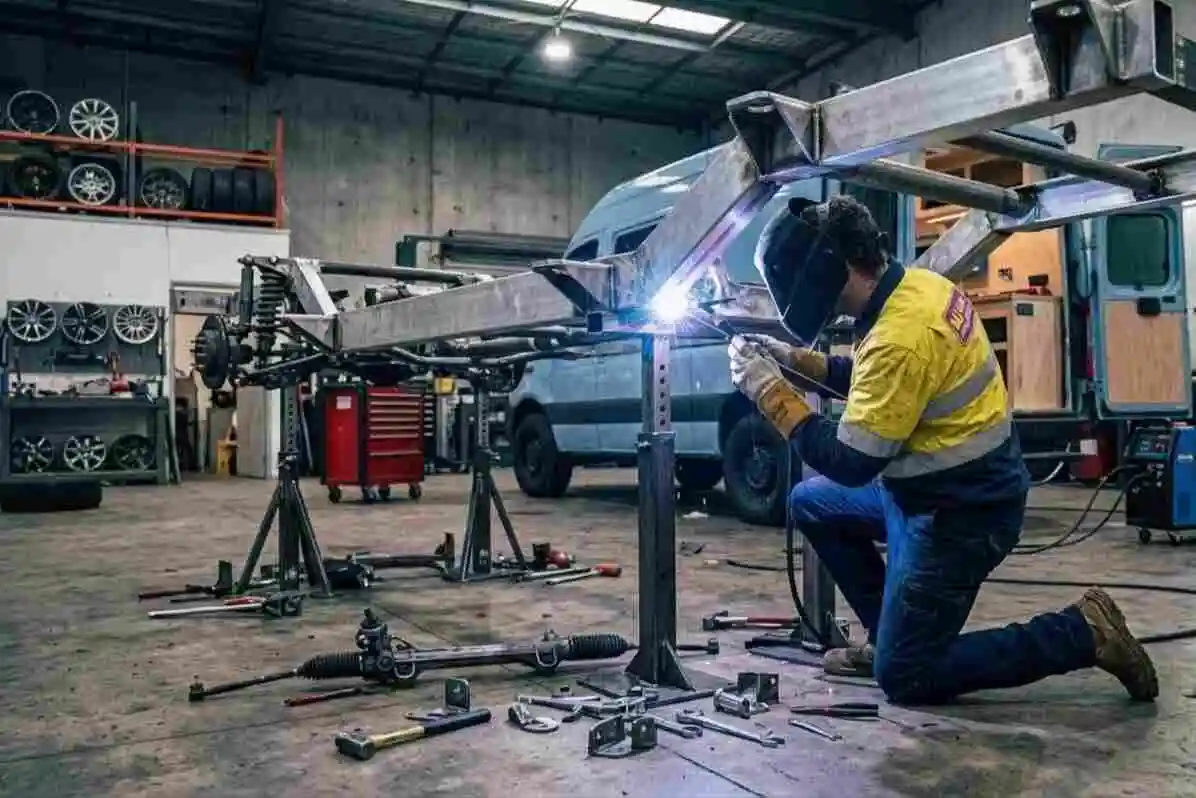
Some bodywork jobs can be carried out on-site at your home or workplace using our fully equipped mobile unit — localised sill patches, jacking points, spring perches, and exhaust work typically fall into this category, usually taking 3-6 hours. Larger jobs needing precise structural alignment, such as full chassis legs, subframes, or complete floor pans, need our workshop with full ramp access and a chassis jig, typically taking 1-3 days. Our guide on on-site welding and fabrication services explains which option suits which repair.
Car Bodywork Welding Costs
Pricing depends on the extent of the damage, the material, and whether it’s a patch repair or full section replacement. Alloy wheel crack repair typically runs around £60-120 per wheel, while structural bodywork repairs start from around £80 and scale up depending on complexity. We work to fixed pricing rather than hourly rates, so the cost is agreed before work begins. For a full breakdown across common repair types, see our 2026 car welding price guide.
Preventing Future Bodywork Corrosion
After a repair, a few habits genuinely extend how long it lasts: rinse the underside of the car through winter to clear road salt, keep door and sill drainage holes clear so water doesn’t pool, touch up stone chips near sills and arches promptly, and have the underbody checked annually rather than waiting for the next MOT. Cavity wax and underseal treatment after a structural repair adds meaningful long-term protection. Our pre-MOT structural rust checklist is a useful annual reference.
How Long Does Car Bodywork Welding Take?
Timescales vary considerably depending on the job. A small exhaust bracket or localised patch repair can often be completed within 1-2 hours. Alloy wheel crack repair typically takes around 2-3 hours per wheel. A localised sill repair or jacking point job usually falls in the 3-6 hour range, which is why these are well suited to on-site visits. Larger structural bodywork — a full sill replacement, complete floor pan section, or chassis leg work — generally takes between one and three days in the workshop, since these require proper alignment, more extensive cutting and fabrication, and appropriate finishing time. If your MOT is expiring imminently, mention it when you get in touch; we prioritise time-sensitive jobs where we can.
Frequently Asked Questions
What’s the difference between bodywork welding and a bodyshop repair?
A bodyshop typically uses filler, primer and paint for cosmetic damage. Bodywork welding replaces the compromised metal itself — the only repair that restores structural strength where corrosion has penetrated.
Can you weld aluminium bodywork, or just steel?
Both. We carry out MIG welding for steel and TIG welding for aluminium in-house, which many general garages can’t offer.
How much does car bodywork welding cost?
Structural repairs start from around £80, with alloy wheel crack repair typically £60-120 per wheel. We quote fixed prices after a physical inspection. See our 2026 price guide.
Do you offer a warranty?
Yes, every repair carries a 12-month warranty, mobile or workshop.
Can bodywork welding be done at my home?
Some jobs, yes — localised sill patches, jacking points, spring perches and exhaust work typically take 3-6 hours on-site. Larger structural work needs our workshop.
Will a welded repair pass an MOT?
A properly executed butt-welded structural repair restores the original strength and will pass inspection. A poor-quality weld or a filled structural panel will fail.
Book Car Bodywork Welding Near You
Whether it’s sill corrosion, a damaged panel, a cracked alloy, or an MOT failure, contact MJ Welding & Fabrication today for a fixed-price quote after a proper inspection.
📞 Call: +44 7532 794934 📍 Bromley St, Lye, Stourbridge DY9 8HU