The Hidden Crisis Under Your Car
Every winter, thousands of vehicles across Stourbridge, Birmingham, Dudley, and Wolverhampton fail their MOT due to one silent enemy: structural corrosion. A hole within 30cm of a suspension mounting point, a crumbling jacking point, or a rusted chassis leg – these are not just advisories; they are safety-critical failures.
When your car fails its MOT on corrosion, the panic is real. “Do I scrap the car? Will a cheap patch-up last? Who actually understands load-bearing welds?”
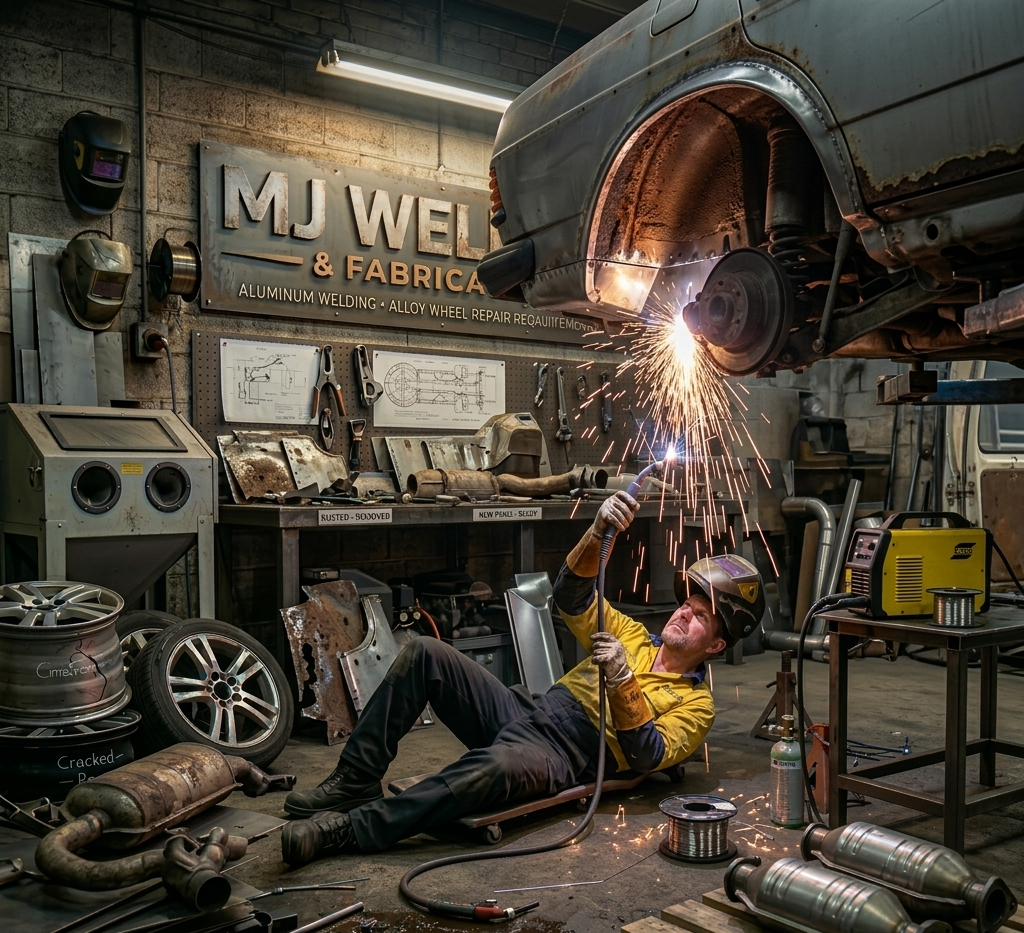
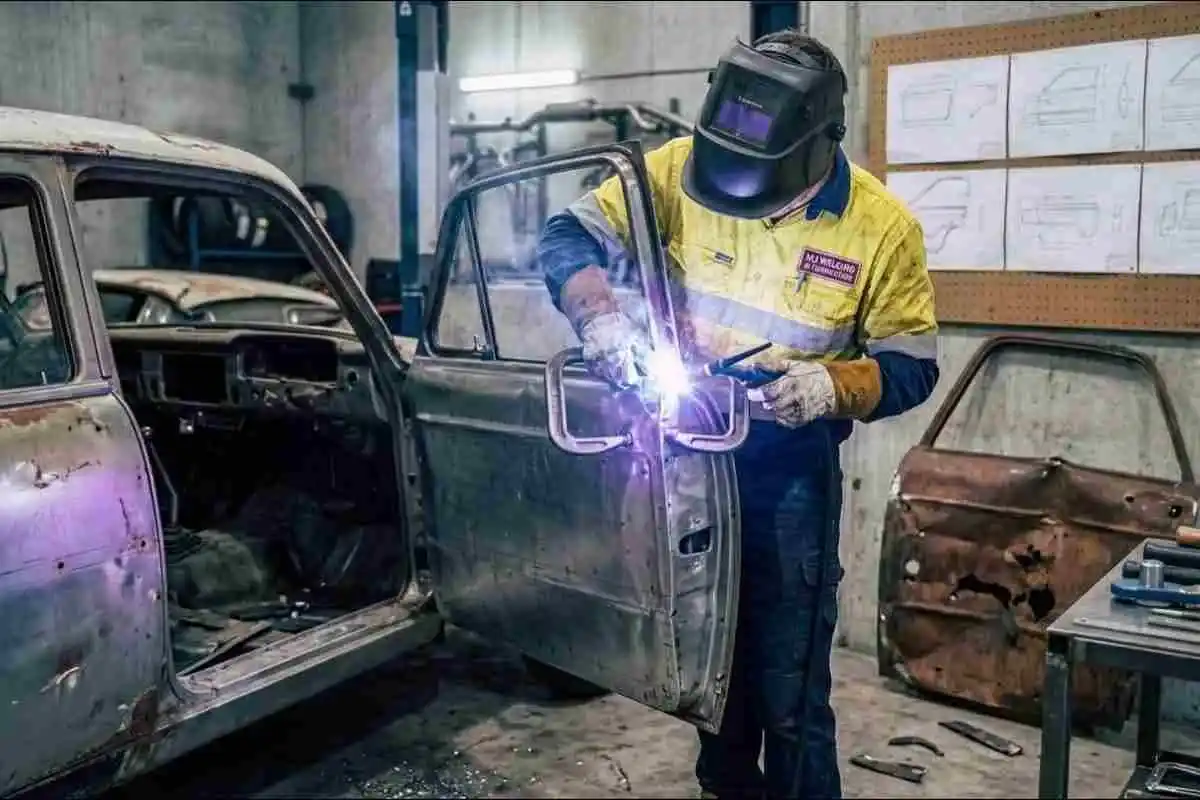
In the West Midlands – the historic heart of UK metalworking and automotive engineering – one local specialist has earned a reputation among daily drivers, fleet operators, and classic car enthusiasts: MJ Welding and Fabrication. Based in Stourbridge with over 15 years of experience, we specialise in structural welding repairs that restore your vehicle’s integrity and get you safely back on the road.
👉 Book your structural welding assessment today
Why West Midlands Cars Rust Faster
The West Midlands experiences a unique combination of factors that accelerate structural rust:
Gritters using rock salt (November to March) – This causes electrolytic corrosion on the underbody. The salt sticks to metal surfaces and creates a chemical reaction that eats through protective coatings.
Clay-rich soil – Common on driveways and grass verges, clay soil traps moisture against the chassis. Unlike sandy soil that drains quickly, clay holds water against your car’s underside for days or weeks.
Industrial legacy air particulates – The West Midlands has a long industrial history. Airborne particles from factories settle on cars and create acidic deposits on bare metal.
Older housing with narrow driveways – Many West Midlands homes have narrow driveways or on-street parking. Cars are underused and sit for long periods, allowing condensation to build up inside box sections.
The result: Cars in Stourbridge, Birmingham, Dudley, and Wolverhampton rust 2-3 times faster than vehicles in drier, less industrial parts of the UK.
👉 Why West Midlands drivers trust MJ Welding and Fabrication
The MOT Examiner’s View: What They Look For
MOT examiners follow strict guidelines when inspecting for structural damage. They are looking for:
- Excessive Corrosion: Corrosion that has progressed to create a hole or significantly weaken the metal
- Sharp Edges: Resulting from corrosion or accidental damage, which could cause injury
- Fractures or Cracks: Indicating structural fatigue or impact damage
- Insecure Components: Any structural part that is insecure due to corrosion or damage
‘Prescribed Areas’: These are specific, critical areas of the vehicle structure that must be free from significant corrosion or damage. They include seatbelt anchorages, suspension mounting points, steering box mountings, and the vehicle’s monocoque or chassis.
Corrosion in these areas, if it affects strength or security, will lead to an immediate MOT failure.
👉 Learn about our structural welding services
Common Issues Requiring Welding for MOT Pass – Problems and Solutions
Several areas on a vehicle are particularly susceptible to rust and damage that often necessitate welding repairs to pass an MOT. Below are the most common issues we encounter and how MJ Welding and Fabrication solves them.
Issue 1: Corroded Sills
The Problem: Sills are the structural beams running along the bottom sides of your car. They are prone to collecting dirt and moisture, leading to rust. Significant holes or severe corrosion in the sills will result in an MOT failure.
Why It Happens in the West Midlands: Road salt, moisture, and grit get trapped between the sill and the underside of the car. The inner sill cavity rusts from inside out, often without any visible warning on the outside.
Signs to Watch For:
- Bubbling or blistering paint along the bottom edge of the doors
- Visible holes or flaking rust
- Soft spots when pressed with a screwdriver handle
- Crumbling metal near the jacking points
- MOT advisory for “corrosion to sills”
The Solution – How MJ Welding and Fabrication Fixes It:
- Inspect and assess – We thoroughly examine the full extent of the corrosion
- Cut to bright metal – All rust is cut out, at least 25mm beyond visible corrosion
- Fabricate repair section – New panels are shaped from 1.2mm Zintec steel
- Butt-weld the new section – Edge-to-edge welding, never lap-welding
- Grind flush and pinhole check – Every weld is smoothed and inspected
- Cavity wax injection – Internal box sections are treated to prevent future rust
- Epoxy zinc coating – Two coats of anti-corrosion paint applied
Cost and Time: Small patch £80-150 – takes 1-2 hours. Full sill £250-400 – takes 3-4 hours per side.
👉 Expert sill and arch welding in Stourbridge
Issue 2: Crumbling Jacking Points
The Problem: Jacking points are designed to take the full weight of your car. When they rust, they lose strength. A crumbling jacking point can collapse while you’re changing a tyre – the car falls, the jack shoots out, and you or your wheel could be crushed.
Why It Happens in the West Midlands: Jacking points are positioned low to the ground and take concentrated pressure every time the car is lifted. Water and salt sit in the recess, accelerating corrosion.
Signs to Watch For:
- Crumbling or distorted metal where the jack makes contact
- Visible holes or thin, flaking metal
- Movement when pressed firmly
- The jack point bends or collapses when you lift the car
The Solution – How MJ Welding and Fabrication Fixes It:
- Inspect the damage – We check if the surrounding sill area is also affected
- Cut out all rust – We remove the entire damaged section
- Fabricate a new jacking point – Using thicker gauge steel (2mm+)
- Weld securely – Full penetration welding to the sill structure
- Reinforce the area – Additional support plates are added if needed
- Apply rust protection – Cavity wax and epoxy coating
Cost and Time: £120-200 – takes 2-3 hours per side.
Issue 3: Subframe Mounting Point Corrosion
The Problem: Subframe mounting points attach the engine and suspension subframe to the car body. When these corrode, the subframe can shift, causing alignment issues, poor handling, and MOT failure.
Why It Happens in the West Midlands: Subframe mounts are exposed to constant road spray and salt. The metal around the bolts rusts and weakens, often unnoticed until the MOT test.
Signs to Watch For:
- Rust bubbles around the large bolts under the car
- Cracking or flaking metal near subframe bushes
- Unusual clunking or steering vagueness on the road
- Uneven tyre wear
- MOT failure for “subframe mounting point weakened”
The Solution – How MJ Welding and Fabrication Fixes It:
- Inspect and assess – We check the full extent of corrosion
- Remove the subframe if necessary – For full access
- Cut back to solid metal – All rust is removed
- Fabricate new mounting plates – Using high-strength steel
- Weld the new plates – Full penetration welding
- Drill new bolt holes – Accurate alignment is critical
- Reinforce and protect – Epoxy coating and cavity wax
Cost and Time: £350-600 – takes 4-6 hours.
👉 Structural welding for mounting points
Issue 4: Spring Perch and Suspension Mount Failure
The Problem: The spring perch holds the entire corner weight of your vehicle. When it rusts, it weakens. A collapsed spring perch can cause the suspension to fail completely while driving – the wheel can fold upward into the wheel arch, causing a serious crash.
Why It Happens in the West Midlands: Spring perches are exposed to constant water and salt spray. They are also under constant stress from the weight of the vehicle, accelerating fatigue and corrosion.
Signs to Watch For:
- Heavy rust around the top or bottom of coil springs
- Visible holes or distorted metal
- Uneven tyre wear
- Creaking or clunking from the suspension
- The car sitting lower on one corner
The Solution – How MJ Welding and Fabrication Fixes It:
- Inspect the full area – We check the spring and mounting area
- Remove the spring and suspension – For full access
- Cut out all corroded metal – Back to bright steel
- Fabricate a new spring perch – Using high-grade steel
- Weld the new perch – Full penetration welding to factory alignment
- Reinforce the area – Additional support plates if needed
- Reassemble and test – Suspension geometry checked
Cost and Time: £200-350 – takes 3-5 hours per side.
Issue 5: Chassis Leg Corrosion
The Problem: Chassis legs are the main longitudinal strength members of your vehicle. They are the backbone of the monocoque structure. Rust here is serious – a holed or weakened chassis leg is an immediate MOT fail.
Why It Happens in the West Midlands: Chassis legs are positioned low and are constantly exposed to road spray. They rust from inside out due to moisture entering through drain holes.
Signs to Watch For:
- Heavy rust along the long, boxed sections running front to back
- Visible holes or flaking metal
- Distortion or bending
- MOT failure for “chassis leg excessively corroded”
The Solution – How MJ Welding and Fabrication Fixes It:
- Full inspection – We check the full length of the chassis leg
- Support the vehicle – Proper jacking and support for safety
- Cut back to bright metal – All rust is removed
- Fabricate a new section – Using correct gauge steel
- Butt-weld the new section – Full penetration welding
- Reinforce and protect – Internal cavity wax, external epoxy coating
- Final inspection – Structural integrity confirmed
Cost and Time: £400-800 – takes 1-2 days.
Issue 6: Floor Pan Rust
The Problem: Corroded floor pans weaken the entire vehicle structure. They can also allow exhaust fumes into the cabin. A holed floor pan is an MOT fail.
Why It Happens in the West Midlands: Moisture from wet shoes, spills, and condensation rots floor pans from inside. Road spray attacks from outside. The West Midlands’ damp climate accelerates this.
Signs to Watch For:
- Soft or spongy carpet underfoot
- Visible holes from underneath
- Rust bubbles on the floor inside the car
- Damp carpets
The Solution – How MJ Welding and Fabrication Fixes It:
- Inspect the full floor area – We check all footwells
- Remove interior trim if needed – For full access
- Cut out all corroded sections – Back to bright metal
- Fabricate new floor pan sections – With swage lines for strength
- Weld the new sections – Full seam welding
- Seal and protect – Epoxy coating and cavity wax
Cost and Time: £200-400 for a small section – takes 3-6 hours. Full floor pan £600-1,200 – takes 1-2 days.
Issue 7: Crossmember Corrosion
The Problem: Crossmembers provide lateral structural rigidity. They are common on vans and commercial vehicles. A holed crossmember will fail MOT.
Why It Happens in the West Midlands: Positioned low and exposed to road spray, crossmembers rust rapidly – especially on vans used for heavy loads.
Signs to Watch For:
- Rust across the lateral bars under the engine or rear axle
- Holes or thinning metal
- Movement when pressed
- MOT advisory for “corrosion to crossmember”
The Solution – How MJ Welding and Fabrication Fixes It:
- Inspect the crossmember – We check the full length
- Cut out all corroded sections – Back to solid metal
- Fabricate a new crossmember – Using correct gauge steel
- Weld in the new section – Full penetration welding
- Reinforce and protect – Epoxy coating and cavity wax
Cost and Time: £300-600 – takes 4-8 hours.
Issue 8: Seatbelt Anchor Point Corrosion
The Problem: Seatbelt anchors are critical safety components. Rust here is a serious safety fail. The seatbelt may not hold in a collision.
Why It Happens in the West Midlands: Seatbelt mounts are often on the floor or sill, where moisture sits. The West Midlands’ damp climate and salt accelerate corrosion in these hidden areas.
Signs to Watch For:
- Rust around the base of the seatbelt mount
- Visible holes or weakened metal
- Movement when the seatbelt is pulled sharply
- MOT advisory for “corrosion near seatbelt anchorage”
The Solution – How MJ Welding and Fabrication Fixes It:
- Inspect the anchor area – We check the full mounting point
- Cut back 75mm around the anchor – Removes all corrosion
- Fabricate a new reinforcing plate – Using high-strength steel
- Plug-weld the new plate – Full penetration plug welding
- Redrill the mounting hole – Accurate alignment is critical
- Protect and seal – Epoxy coating
Cost and Time: £150-250 – takes 2-3 hours.
Mobile vs Workshop Welding in Stourbridge
| Factor | Mobile Welding | Workshop Welding |
|---|---|---|
| Best for | Sills, jacking points, small patches | Chassis legs, subframes, full floor pans |
| Equipment | 200A MIG, generator, axle stands | 3-phase MIG/TIG, ramp, jig |
| Time typical | 3-6 hours | 1-3 days |
MJ Welding and Fabrication offers both options. If your car is undrivable, we come to you with our fully equipped mobile welding unit.
👉 Book mobile welding across the West Midland
Car Welding Services Across the West Midlands
MJ Welding and Fabrication covers the entire West Midlands region. Find your town:
Stourbridge & Surrounding Areas: Stourbridge, Wollescote, Withymoor, Caledonia, Pedmore, Norton, Gig Mill, Wollaston, Hagley, Clent, Blakedown, Churchill, Romsley, Dunley, Cookley, Shatterford, Tanwood
Birmingham & Surrounding Areas: Birmingham, Edgbaston, Harborne, Selly Oak, Bournville, Longbridge, Northfield, Kings Heath, Quinton, Bearwood, Shirley, Alvechurch
Black Country & Surrounding Areas: Dudley, Wolverhampton, Walsall, West Bromwich, Smethwick, Oldbury, Rowley Regis, Kingswinford, Tipton, Bilston, Wednesbury, Pensnett, Coseley, Darlaston
Solihull & Surrounding Areas: Solihull, Sutton Coldfield, Bromsgrove, Redditch
Worcestershire & Surrounding Areas: Worcester, Ombersley, Martley, Lindridge, Hampton Lovett, Stech Ford, Highley, Broseley, Bridgnorth, Claverley, Penkridge, Wyre Forest, Neen Sollars, Monkhopton, Tysely
👉 Full service areas
👉 Car welding Birmingham
👉 Car welding Dudley
👉 Car welding Wolverhampton
👉 Car welding Solihull
👉 Car welding Walsall
👉 Car welding West Bromwich
👉 Car welding Cookley
👉 Car welding Ombersley
👉 Car welding Rowley Regis
👉 Car welding Kingswinford
👉 Car welding Sutton Coldfield
👉 Car welding Halesowen
👉 Car welding Bromsgrove
👉 Car welding Redditch
👉 Car welding Worcester
👉 Car welding Stech Ford
👉 Car welding Bridgnorth
👉 Car welding Claverley
👉 Car welding Penkridge
👉 Car welding Wyre Forest
10 Frequently Asked Questions About MOT Welding
Q1: Can I pass the MOT with a small rust hole?
It depends entirely on the size, location, and severity of the hole. A tiny pinhole in a non-structural area might be an advisory. However, if it is in a ‘prescribed area’ (critical structural points like seatbelt anchorages, suspension mounts, or main chassis) or if it is large enough to significantly weaken the structure, it will fail.
Q2: What is a ‘prescribed area’ for rust in the MOT?
Prescribed areas are specific, critical parts of the vehicle’s structure that must be free from significant corrosion or damage. These include areas around seatbelt anchorages, suspension mountings, steering box mountings, and the main vehicle structure (monocoque or chassis).
Q3: How long do weld repairs typically last?
The longevity of a weld repair depends on the quality of the work, the materials used, and subsequent rust prevention. A professional, high-quality repair using appropriate materials and properly treated for rust protection can last many years. Poorly executed welds or those left unprotected will likely fail again quickly.
Q4: Is all welding acceptable for MOT?
No. The welding must be to a professional standard, meaning it must be structurally sound, robust, and correctly executed. Patches that are merely tacked on, poorly penetrated, or made with unsuitable materials will not pass.
Q5: What happens if my car fails MOT due to welding issues?
If your vehicle fails its MOT because of structural corrosion or damage requiring welding, you will receive a ‘Refusal of an MOT Test Certificate’. You cannot legally drive the vehicle on the road except to a pre-booked appointment for repairs or to a retest centre.
Q6: Can I use body filler on a structural repair if I have already welded it?
Body filler is purely for cosmetic finishing. While it is acceptable to use a thin layer over a properly welded structural repair to smooth the surface, it must not be used to bridge gaps, cover up poor welding, or provide any form of structural integrity itself.
Q7: What welding methods are acceptable for structural repairs?
For most patch repairs on structural components, the requirement is clear: they must be continuously seam welded. Spot welding is acceptable only if the original panel was initially spot welded and the entire original panel or section has been completely removed.
Q8: Is MIG brazing acceptable for structural repairs?
MIG brazing is only acceptable for structural repairs if it is explicitly recommended by the vehicle manufacturer for that specific repair. It must align with the manufacturer’s approved repair procedures.
Q9: What repair methods are strictly forbidden?
Gas brazing, soldering, adhesive bonding as a standalone method, fibre reinforcement, and body filler are all unacceptable for load-bearing members. These methods do not provide the necessary strength or durability.
Q10: Does exhaust welding affect the MOT?
Welding an exhaust system is generally acceptable for the MOT, provided the repair is secure, does not leak, and does not compromise the exhaust’s function. However, if the exhaust is insecure due to rusted mounting points, the structural welding to secure those mounts would be essential for a pass.
👉 Visit our blog for more welding advice
Conclusion: Don’t Let Structural Rust Write Off Your Car
Structural rust does not care about your MOT expiry date or your budget. But it does care about competent welding.
A professional structural repair costs a fraction of vehicle replacement. Most sill or jacking point repairs are £200-500 – far less than the £2,000-10,000 cost of a new car.
MJ Welding and Fabrication has saved thousands of West Midlands vehicles from the scrap heap. We do not patch – we rebuild. We do not hide rust – we remove it completely.
If your car’s next MOT is threatened by the words “corrosion near structural component”, do not gamble with a cheap welder. Go to the name that Stourbridge car owners trust.
Book your structural assessment today.
👉 Contact MJ Welding and Fabrication
Connect With Us
📞 Call or WhatsApp: +44 7532 794934
📧 Email: info@mjweldingfabrication.co.uk
🌐 Website: https://mjweldingfabrication.co.uk/
📍 Workshop: Bromley St, Lye, Stourbridge DY9 8HU
Opening Hours:
Monday to Sunday – 8am to 6pm
Other Helpful Resources
👉 Sills & Arch Welding in Stourbridge: Why MJ Welding & Fabrication Is the #1 Choice
👉 The Ultimate Guide to Professional Aluminium Chassis Repair & Replacement
👉 Camper Van Welding Stourbridge: Expert Repairs by MJ Welding & Fabrication
👉 MOT Failure Car Welding | Expert Repairs by MJ Welding & Fabrication Stourbridge
👉 Welding with a MIG Welder Stourbridge | Professional MIG Welding
👉 Alloy Rim Crack Repair Stourbridge | Expert Rim Welding
👉 Alloy Wheel Crack Repair Stourbridge | Expert Alloy Welding
👉 Automobile Welding Stourbridge | Expert Auto Welding Services
👉 Car Welding Stourbridge | Professional Car Welding Services
👉 TIG Welding Stourbridge | Aluminium & Precision Welding
👉 MIG Welding Stourbridge | Car & Automotive Welding