Welding Sills & MOT Repair Costs Explained
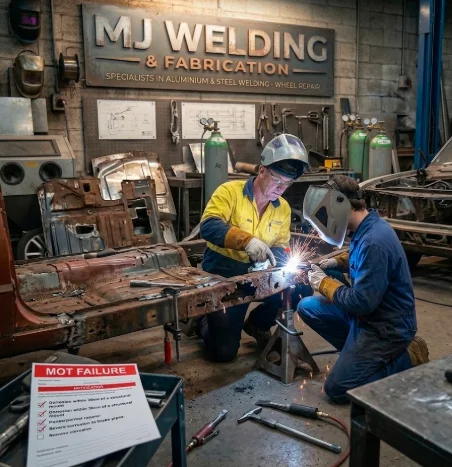
Rusty car sills are a common reason for MOT failure in the UK. If your car has failed its MOT or received an advisory for corrosion, you may be wondering how much the repair will cost and whether you need a small patch repair or a complete sill replacement.
The cost depends on the extent of the rust, the design of your vehicle and whether the damage has spread to nearby structural areas. Understanding these factors can help you compare quotes and choose a repair that offers lasting value.
At MJ Welding & Fabrication, we provide welding and vehicle repair services for customers across Stourbridge, Birmingham, Dudley, Halesowen, Wolverhampton and the wider West Midlands. This guide explains common sill problems, their solutions, repair costs and what to consider before booking a repair.
Why Do Car Sills Rust?
Car sills are the metal sections running along the lower sides of a vehicle, beneath the doors. They help support the body structure and contribute to the vehicle’s overall strength.
Because sills are close to the road, they are regularly exposed to water, mud, dirt and road salt. Moisture can collect around seams and beneath protective coatings, allowing rust to develop over time.
Corrosion can also begin inside the sill and spread outwards. This means a small rust spot on the surface may hide more extensive damage underneath.
If your car has developed structural rust, our guide on why cars fail their MOT on corrosion explains the common causes and why these problems should be assessed properly.
Common Sill Problems and Their Solutions
1. Surface Rust and Bubbling Paint
Problem: Small rust spots, bubbling paint and discoloured metal can indicate that corrosion has started. Although surface rust is not always a structural problem, it can become more serious if left untreated.
Solution: The affected area should be inspected to establish whether the rust is limited to the surface or has weakened the metal. Minor corrosion may need cleaning and protective treatment, while deeper damage may require cutting out and replacing the affected section.
Why Early Inspection Matters
Checking rust early can help identify problems before they spread. It may also prevent a small repair from turning into a larger and more expensive job.
2. Holes in the Sills
Problem: As corrosion progresses, holes can develop along the sill or around its lower edges. Depending on their location and severity, these holes may weaken the vehicle’s structure and cause an MOT failure.
Solution: A welding specialist should assess the damaged section and check the surrounding metal. Corroded material needs to be removed before suitable replacement metal is fitted and welded into place.
Simply covering a hole with filler or another piece of metal may hide the damage without restoring the required structural strength.
3. Rust Around Jacking Points
Problem: Jacking points support the vehicle when it is raised. If corrosion weakens these areas, they may no longer be safe to use.
Solution: The affected metal needs to be inspected and repaired using a suitable method for the vehicle’s structure. Avoid using a weakened jacking point until the damage has been professionally assessed.
4. Corrosion Around Wheel Arches
Problem: Rust can spread between the sill and nearby wheel arch, particularly where dirt and moisture collect around panel joints. Damage in both areas can increase the amount of work required.
Solution: Both sections should be checked to determine whether a local repair or a larger replacement is needed. Our sills and arch welding service provides more information about these types of vehicle repairs.
How Much Does Sill Welding Cost?
There is no single price for every sill repair. The final cost depends on the vehicle, the amount of corrosion and the time required to complete the work.
A small, localised patch repair will generally cost less than replacing an entire sill. However, a repair that looks minor from the outside may become more involved once trims and underseal are removed.
Main Factors That Affect Repair Costs
- Extent of damage: Larger areas of corrosion require more cutting, preparation and replacement metal.
- Repair method: A small patch usually requires less work than a full sill replacement.
- Vehicle design: Some vehicles have reinforced or multi-layer sill structures that take longer to repair.
- Hidden corrosion: Rust inside the sill or around nearby structural areas can increase the amount of work needed.
- Finishing: Sealing and corrosion protection can also affect the overall cost.
Why the Cheapest Quote Is Not Always Best
A low quote may not include all the work needed to repair the damage properly. If rust is not removed completely, corrosion may return and lead to further repairs.
Before accepting a quote, ask what work is included, how the damaged metal will be repaired and whether additional costs may arise if hidden rust is discovered.
Sill Patch Repair vs Full Replacement
Choosing between a patch repair and a full replacement depends on the condition of the sill and the extent of the corrosion.
When Is a Patch Repair Suitable?
A patch repair may be suitable when the damage is limited to a small section and the surrounding metal remains structurally sound. The corroded section is removed, and suitable replacement metal is fitted and welded into place.
This can be a cost-effective option when the rest of the sill is in good condition.
When Is Full Replacement Necessary?
If rust extends along much of the sill or affects several layers of metal, a small patch may not provide a suitable long-term repair. Replacing a larger section or the complete sill may be necessary.
The correct approach should be based on the actual condition of the vehicle rather than price alone. Read our guide to sill patch repair vs full replacement to understand the difference between these options.
How Is a Professional Sill Repair Carried Out?
A proper sill repair involves more than welding a new piece of metal over a rusty area. Preparation, welding quality and corrosion protection all matter.
- Inspection: The sill and surrounding areas are checked to establish how far the corrosion has spread.
- Removal of damaged metal: Rusted and weakened sections are cut away until sound metal remains.
- Preparation: Replacement metal is measured and shaped to suit the affected section.
- Welding: The new section is fitted and welded using a method appropriate for the vehicle.
- Finishing: The repair is checked, and suitable sealing and corrosion protection are applied where appropriate.
Our professional structural welding service provides more information about the importance of repairing structural metalwork correctly.
How Can You Prevent Further Sill Corrosion?
Although rust cannot always be prevented, regular checks and suitable maintenance can help reduce the risk of further damage.
- Keep the underside of your vehicle clean, especially after driving on salted winter roads.
- Look for bubbling paint, flaking metal and rust around the lower edges of the doors.
- Arrange an inspection if you notice new rust patches or receive an MOT advisory.
- Ensure repaired areas receive suitable protective coatings.
- Ask your repair specialist whether hidden cavities need additional corrosion protection.
Before your next MOT, use our pre-MOT structural rust checklist to understand which areas may need attention.
How to Choose the Right Welding Specialist
Choosing a repairer involves more than comparing prices. You need to understand what work is being proposed and whether it addresses the actual damage.
Questions to Ask Before Booking
- Will the vehicle receive a proper inspection?
- Will the rust be cut back to sound metal?
- Is a patch repair suitable, or is a larger replacement needed?
- Does the quote include finishing and corrosion protection?
- Will I be informed if additional damage is discovered?
A reliable specialist should explain the recommended repair method clearly and tell you what is included in the quote.
You can learn more about our car bodywork welding and fabrication services and our wider welding and fabrication solutions.
Frequently Asked Questions
1. How much does it cost to weld a rusty car sill?
The cost depends on the vehicle, the extent of corrosion and whether a patch repair or full replacement is required. Hidden rust can also affect the final price. An inspection is the best way to obtain an accurate quote.
2. Will rusty sills cause an MOT failure?
Not every rusty sill will fail an MOT. Minor surface corrosion may not affect the result, but serious corrosion or weakened metal in a structural area can lead to a failure.
3. Can a rusty sill be repaired instead of replaced?
Yes. A patch repair may be suitable if the damage is limited and the surrounding metal remains sound. Extensive corrosion may require a larger replacement.
4. How long does a sill welding repair take?
A small patch repair generally takes less time than a full sill replacement. The amount of corrosion, vehicle design and any additional damage affect the time required.
5. Can I get a sill repair quote from photographs?
Photographs can help identify visible damage and provide an initial estimate. However, hidden corrosion may not be visible, so an inspection may be needed to confirm the cost.
6. Is it safe to drive with rusty sills?
It depends on the severity and location of the corrosion. Significant structural damage can affect safety. If the sill or jacking points appear badly weakened, seek professional advice before driving.
7. Does car insurance cover sill rust repairs?
Standard motor insurance generally excludes corrosion caused by normal wear and tear. Cover depends on your policy, so check with your insurer before arranging the repair.
8. Is sill repair worth it on an older car?
It can be worthwhile if the vehicle is otherwise in good condition and the repair cost is reasonable compared with its value. Consider any other repairs the vehicle may need before deciding.
9. Can I repair rusty sills myself?
Minor surface rust may be suitable for basic maintenance, but structural sill damage requires proper assessment and repair. Filler or a cover placed over rust will not restore the required structural strength.
10. How can I prevent rust from returning after welding?
Proper metal preparation, suitable finishing and appropriate corrosion protection can help reduce the risk of rust returning. Regular inspections and keeping the underside clean can also help.
Conclusion
Rusty car sills can lead to MOT problems, expensive repairs and concerns about vehicle safety. The best approach is to identify the damage early and choose a repair that addresses the underlying corrosion rather than simply covering it up.
A small patch may be enough for localised rust, while more extensive damage can require a larger replacement. The right option depends on the condition of the metal, the vehicle’s construction and the extent of the corrosion.
MJ Welding & Fabrication provides vehicle welding and fabrication services across Stourbridge and the wider West Midlands. If you have noticed rusty sills or received an MOT advisory, contact our team to discuss the repair options available and obtain a quote based on the actual condition of your vehicle.