Fabrication is often confused with straightforward welding, but the two aren’t quite the same thing. Welding joins metal together; fabrication is the broader process of cutting, shaping, forming, and building metal components — sometimes repairing an existing part, sometimes creating something entirely custom from raw steel or aluminum. For vehicles in particular, that distinction matters, because a lot of “repairs” are actually small fabrication jobs in disguise: a rebuilt bracket, a custom-formed panel section, or a rebuilt subframe corner that no longer exists as an off-the-shelf part.
At MJ Welding & Fabrication, we’re steel & aluminum fabrication experts serving the West Midlands, working from our Halesowen workshop on everything from everyday structural car repairs to bespoke fabricated components. In this guide, we’ll explain what fabrication actually involves, the services we offer, the problems we solve most often, and the areas we cover across the region.
What Does “Fabrication” Actually Mean?
Fabrication covers the full process of turning raw or damaged metal into a finished, functional component. That can mean:
- Cutting and shaping new steel or aluminum sections to replace corroded or damaged originals
- Forming custom brackets, mounts, or reinforcement plates that aren’t available as standard parts
- Rebuilding structural sections of a chassis or subframe from scratch, rather than patching over damage
- Creating bespoke metal components for classic car restorations, camper van conversions, or non-standard repairs
Welding is the joining technique used throughout this process, but fabrication is the wider skill set — understanding how a piece of metal needs to be cut, shaped, and reinforced before it’s ever welded into place. This is why we describe ourselves as fabrication specialists first, not just welders who happen to also fabricate.
Why Steel and Aluminum Fabrication Are Different Skills
Steel and aluminum don’t just weld differently — they fabricate differently too. Steel is generally more forgiving to cut, bend, and shape, and it’s the material most structural vehicle components have traditionally been built from. Aluminum, by contrast, is lighter, more prone to distortion under heat, and increasingly common in modern vehicle bodywork and components. As Metal Supermarkets UK explains, different aluminum alloys are chosen for different automotive applications depending on the balance of strength, corrosion resistance, and formability required — which means fabricating an aluminum component properly requires knowing which alloy you’re working with and how it behaves.
A fabricator who only understands steel will struggle to produce a clean, strong aluminum component — and the reverse is often just as true. That’s why our team is trained and equipped to work confidently with both materials, matching the fabrication method to whichever metal a job requires. Our guide on aluminum vs steel welding covers this distinction in more depth.
Our Steel & Aluminum Fabrication Services
Structural Fabrication & Repair
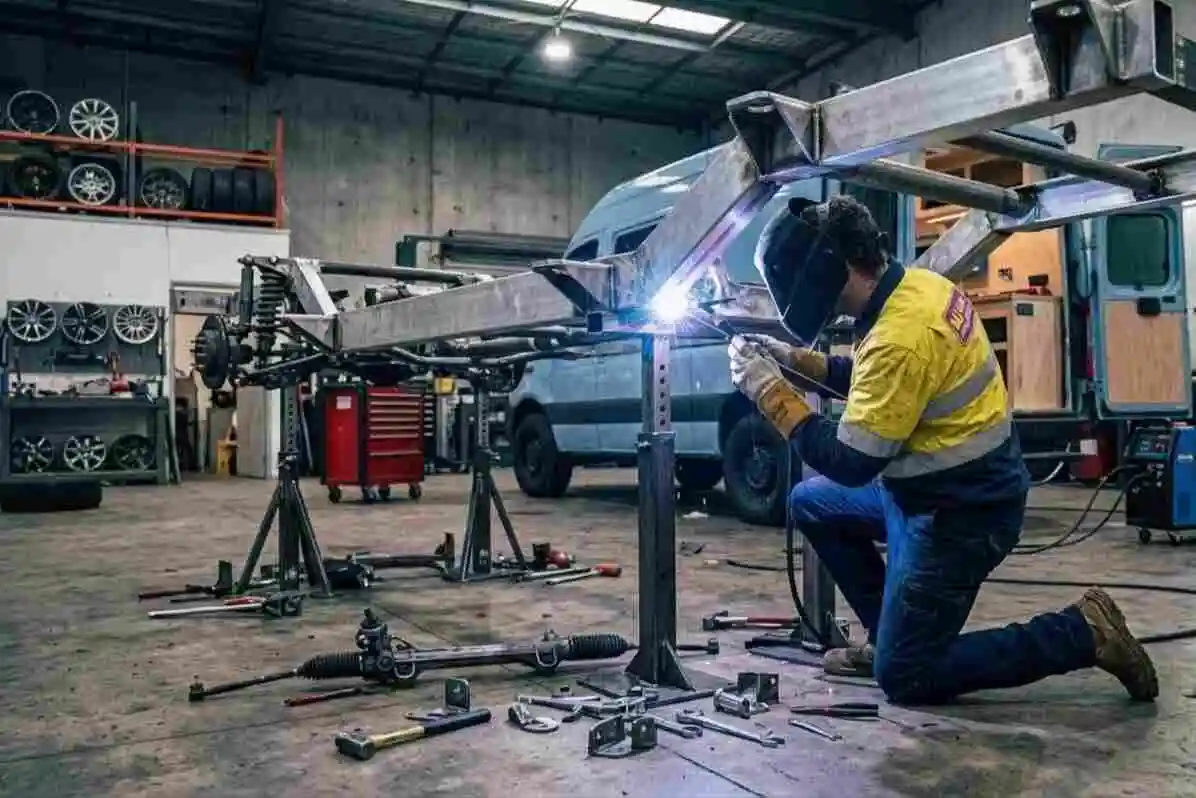
For chassis rails, subframes, and other structural sections, our structural welding service and chassis repair service often involve fabricating replacement sections from scratch when off-the-shelf parts aren’t available or don’t fit correctly — particularly on older or less common vehicles.
Aluminum & Steel Welding and Fabrication
Our dedicated aluminum and steel welding service covers fabrication work across both materials, using MIG, TIG, and ARC processes depending on the metal and the job. Whether it’s a fabricated steel bracket or a shaped aluminum panel section, we match the process to the material properly rather than applying a one-size-fits-all approach.
Sill, Arch & Body Panel Fabrication
Sills, wheel arches, and body panels frequently need custom-fabricated sections rather than simple patches, especially where corrosion has spread beyond a small area. Our sills and arch welding service, body panel repair service, and car body panel replacement service all involve fabricating replacement metal to the correct shape, gauge, and finish.
Exhaust Fabrication & Repair
Beyond simple welding fixes, our exhaust welding service sometimes involves fabricating replacement sections of pipework where an original part is no longer available or has corroded beyond a standard repair.
Alloy Wheel & Rim Fabrication Repairs
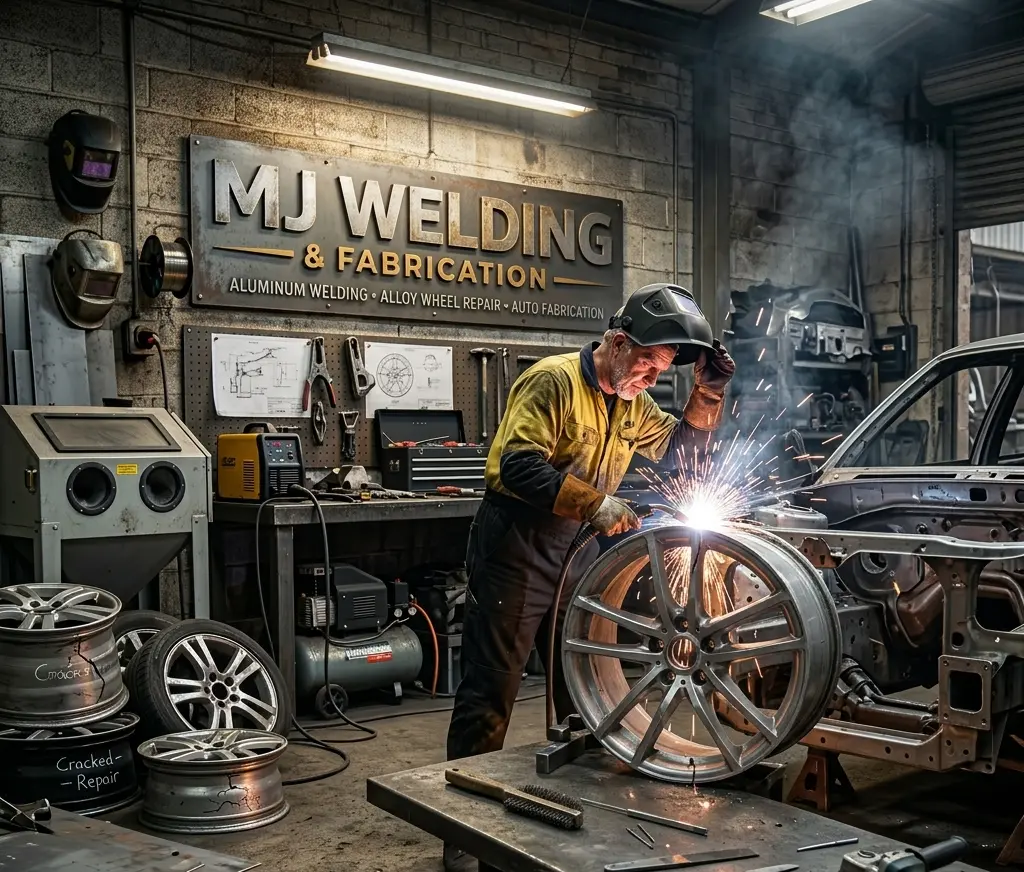
Cracked alloy wheels require precise fabrication-level welding to restore both strength and shape. Our alloy wheel crack repair and alloy rim crack repair services use TIG welding to rebuild damaged sections accurately, avoiding the expense of a full wheel replacement. Our post on what causes alloy wheel cracks explains why this kind of damage is so common on West Midlands roads.
Camper Van & Motorhome Fabrication
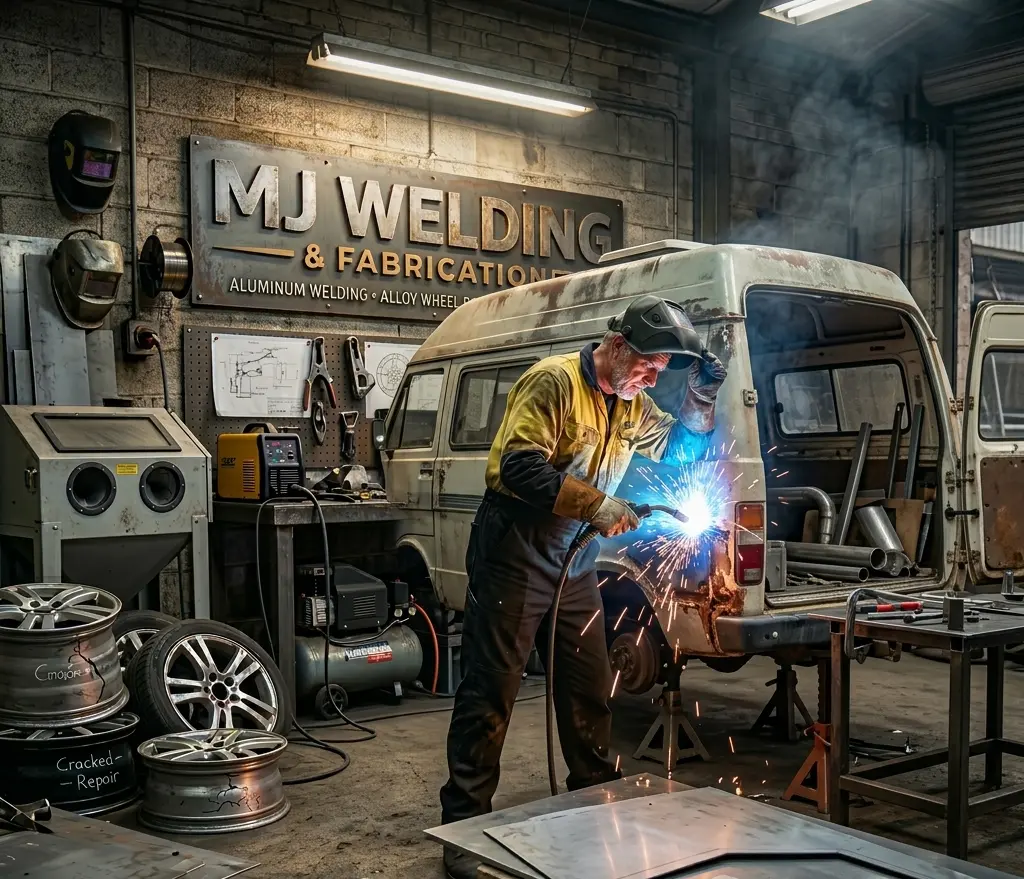
Camper vans and motorhomes often need larger-scale fabrication work — reinforced brackets, custom bodywork sections, or rebuilt chassis components. Our camper van welding service covers this kind of bespoke fabrication alongside standard repairs.
Classic Car Restoration Fabrication
Classic car restoration is one of the areas where fabrication skills matter most, since original panels and parts are frequently unavailable and have to be recreated by hand to match the vehicle’s original specification. Our guide on classic car restoration welding covers what this kind of work typically involves.
Common Fabrication Problems We Solve Across the Region
- Corroded sills and chassis sections that need full fabricated replacement rather than a patch — see our guide on how to tell if your car’s sills are rusted
- MOT failures caused by structural corrosion, explained in why your car failed its MOT on corrosion
- Damaged or cracked alloy wheels from potholes and kerb strikes
- Missing or discontinued parts on older and classic vehicles, requiring custom fabrication
- Non-standard repairs on camper vans, modified vehicles, or vehicles with previous poor-quality repair work
- Mixed-material vehicles where steel and aluminum components meet and require different fabrication approaches
If you’re weighing up whether a repair or a fuller fabrication job is needed, our guides on 10 hidden signs your car needs welding, 7 signs of structural welding repair, and sill patch repair vs full replacement are all useful starting points.
When Fabrication Makes More Sense Than a Standard Repair
Not every job needs full fabrication — plenty of damage can be fixed with a straightforward weld or patch. But there are a few clear signs that a fabrication approach is the better route:
The damage is extensive. Corrosion or cracking that’s spread across a large area is usually better addressed by fabricating and fitting a full replacement section, rather than patching around multiple small spots.
The part is discontinued. Older vehicles, in particular, often can’t get hold of an original replacement panel or bracket. Fabricating a matching component is frequently the only realistic option.
Previous repairs have failed. If a car has had patch repairs before that haven’t held up, it’s often a sign that a more thorough, fabricated solution is needed rather than repeating the same short-term fix.
The vehicle is non-standard. Modified vehicles, conversions, and camper vans frequently need bespoke components that were never mass-produced in the first place, which puts them firmly in fabrication territory rather than standard repair.
In each case, we talk customers through the reasoning honestly — recommending a simpler repair where that’s genuinely the right call, and being upfront when fabrication is the more sensible long-term investment.
Frequently Asked Questions
What’s the difference between fabrication and welding?
Welding is the process of joining metal together. Fabrication is the broader process of cutting, shaping, forming, and building metal components — welding is one part of it, but fabrication also involves planning and constructing the piece itself, sometimes from raw material.
Can you fabricate a replacement part if it’s no longer available to buy?
Yes — this is one of the most common reasons customers come to us, particularly for classic cars or older vehicles where original panels or brackets are discontinued. We can fabricate a replacement to match the original dimensions and profile.
Do you fabricate in both steel and aluminum?
Yes. We work regularly with both materials, matching the fabrication method, filler, and finishing process to whichever metal the job requires.
Will a fabricated repair pass an MOT?
A fabricated structural repair, completed to the correct standard, should meet DVSA requirements. The key factor is matching the strength and construction method of the original component, which is central to how we approach every fabrication job.
Do you take on custom fabrication work outside of standard car repairs?
Yes — alongside vehicle repairs, we carry out general metal fabrication, including custom brackets, structural components, and bespoke fabricated parts for vans and camper vans.
How do I know if my repair needs fabrication rather than a simple weld?
If the damaged area is extensive, the original part is no longer available, or a straightforward patch won’t restore proper strength, fabrication is usually the better long-term option. We’ll advise honestly during your assessment which approach suits your vehicle.
Book Steel & Aluminum Fabrication Services Across the West Midlands
Whether it’s a corroded chassis section, a discontinued classic car panel, or a custom-fabricated bracket for a camper van conversion, proper fabrication is what separates a repair that lasts from one that needs redoing within a year. At MJ Welding & Fabrication, we bring genuine steel and aluminum fabrication expertise, built on 15+ years of automotive experience, to jobs across the West Midlands.
Get in touch through our Contact Us page to book an assessment, explore our full range of services on the Services page, or browse more expert guides on our Blog.